
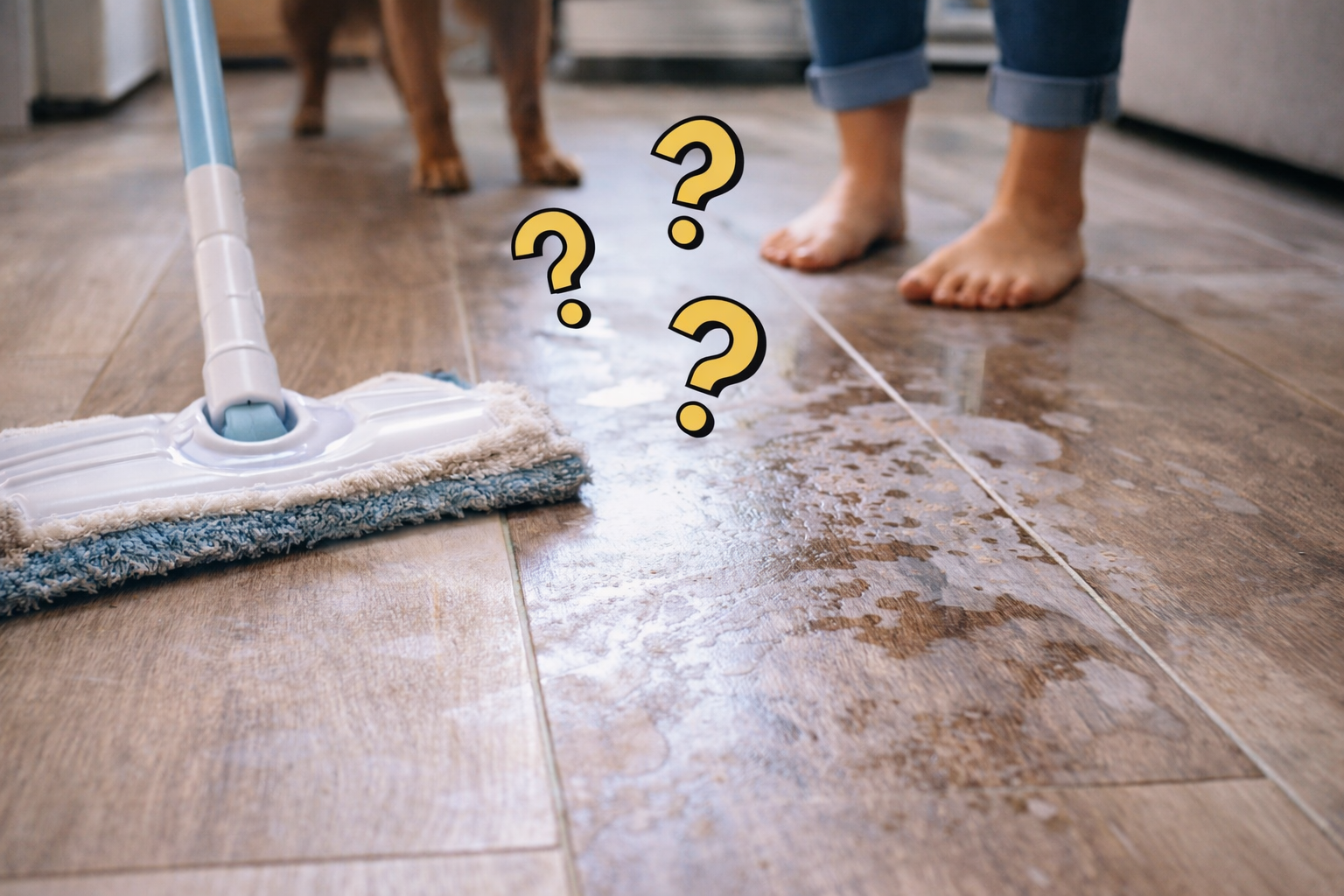
Why floors still feel dirty after mopping is one of those questions people ask when their floors look clean — but never feel right under bare feet.
Quick Answer
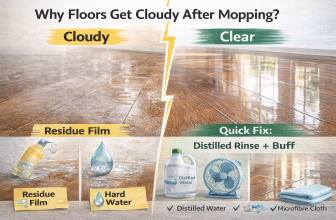
When people ask why floors still feel dirty after mopping, the answer is almost always residue — not dirt. Floor cleaners, dirty mop heads, and excess moisture spread oils and grime instead of removing them, creating a thin film on the surface.
This residue buildup is why floors can look clean but feel sticky, dull, or squeaky once dry.
Using too much floor cleaner can actually make floors feel dirtier over time, since leftover detergent attracts dust and oils.
Steam cleaning can help remove residue by breaking down oils with heat and lifting grime with microfiber pads, but it only works safely on sealed floors and when used correctly.
Introduction
I used to think the problem was me.
Wrong cleaner. Wrong technique. Not mopping often enough.
So I scrubbed harder, added more solution, and mopped again.
The floors looked fine.
They dried fast.
And yet — every time I walked barefoot — they still felt… off.
Not dirty-dirty.
Just sticky. Dull. Slightly squeaky in the worst way.
That’s when I realized: this isn’t a cleaning problem. It’s a tool problem.
The “looks clean but isn’t” illusion
Floors are very good liars. They reflect light. They dry evenly. They hide residue better than almost any other surface in your home. So visually, everything checks out. But your feet tell a different story.
If your floors:
- feel tacky after drying
- squeak when they didn’t used to
- attract dust again within hours
- never quite look bright, no matter how often you clean
you’re not dealing with dirt. You’re dealing with buildup.
What actually stays on your floors
Most of what coats floors isn’t visible grime. It’s a thin film made of:
- cooking grease particles that settle out of the air
- skin oils (humans + pets)
- detergent residue
- moisture that never fully evaporated
Over time, this film changes how floors feel more than how they look. That’s why people describe floors as “never feeling clean,” even when they mop regularly.
Why regular mopping often makes it worse
Traditional mopping sounds logical: water + cleaner = clean floor.
In practice, this usually happens:
- Water loosens surface dirt
- Detergent breaks it up
- The mop spreads everything evenly
- Residue dries in place
If:
- the mop head isn’t truly clean
- the water isn’t changed often
- the cleaner isn’t fully rinsed
you’re not removing buildup — you’re redistributing it.
That’s why so many people notice their floors feel worse a day later.
And if you’re using steam on wood without understanding the risks, it’s worth knowing what actually happens over time. I break that down in detail in Can steam mops damage hardwood floors — because yes, they can, just not in the way most people expect.
The real issue isn’t your floor — it’s your mop
This was the mindset shift for me:
Floors don’t stay dirty because they can’t be cleaned.
They stay dirty because most mops don’t remove residue.
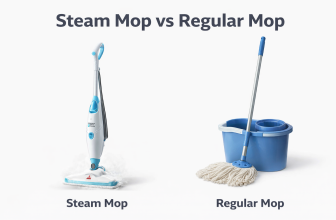
Many traditional mops:
- absorb dirty water
- don’t lift oils
- don’t kill bacteria
- and leave moisture behind
They clean visually, not functionally. Which is exactly why floors look clean but still feel wrong.
So… does steam actually fix this?
Short answer: sometimes. Honest answer: only when used correctly.
Steam works differently because:
- heat loosens grease and oils instead of diluting them
- microfiber pads lift residue rather than smear it
- high temperature reduces bacteria without chemicals
Steam doesn’t magically sterilize your home, but it does reduce residue far more effectively than cold-water mopping — especially on sealed surfaces.
This is why so many people suddenly say:
“My floors finally feel clean.”
They’re not imagining it. The film is actually gone.
If you want the science and practical reasoning behind that, I explain it step by step in Benefits of steam mops and why steam cleaning feels different under bare feet.
Why some people hate steam mops (and they’re not wrong)
Steam isn’t foolproof.
Steam mops fail when:
- pads aren’t changed often
- steam is left sitting in one spot
- floors aren’t properly sealed
That’s how you get:
- streaking
- haze
- swelling or warping on wood
Steam is powerful — but lazy steam cleaning is worse than bad mopping.
This is also why choosing a steam mop based on your floor type matters more than brand hype. I cover that in Steam mops for every floor guide, with real-world examples of what works (and what doesn’t) on tile, laminate, vinyl, and hardwood.
What actually worked for me (real life, not showroom demos)
What finally fixed the problem wasn’t scrubbing harder — it was changing how I cleaned.
This combo made the difference:
- microfiber pads only (washed, not endlessly reused)
- minimal cleaner — sometimes none
- slower passes instead of aggressive scrubbing
- letting floors dry completely before walking
And yes — testing an actual steam mop in daily life mattered.
Missed spills. Pet tracks. Quick cleanups before guests.
Not “perfect conditions.”
If you’re curious what that looked like in practice — including what didn’t work — I shared the full breakdown in my Senmo steam mop review.
FAQ
Why do my floors still feel dirty after mopping?
Almost always residue, not dirt. Cleaning products, dirty mop heads, and excess moisture spread oils and detergent across the floor instead of removing them. The floor looks clean visually but has a thin film that your feet notice immediately.
Why do floors feel sticky after mopping?
Detergent residue left behind after the water evaporates. Even small amounts of cleaner that aren’t fully removed attract dust and oils and create a tacky film underfoot. Using less cleaner — or none at all — often fixes it completely.
Can mopping too often make floors feel dirtier?
Yes. Every pass with a dirty mop or excess cleaner adds another layer of residue. Floors that are mopped frequently without rinsing between sessions accumulate buildup faster than floors cleaned less often with the right technique.
Why do floors look clean but feel wrong under bare feet?
Because visual cleanliness and surface cleanliness are different things. Floors reflect light and appear clean even with a thin residue film on them. Your feet are more sensitive than your eyes — that squeaky or slightly sticky feeling is real, even when the floor looks spotless.
Does steam mopping fix floors that always feel dirty?
Often yes, on sealed floors. Steam breaks down grease and oils with heat, and microfiber pads lift residue rather than smear it. But it only works if pads are clean and steam is used correctly — lazy steam cleaning can make the problem worse, not better.
Final thought (from one barefoot tester to another)
If your floors never feel truly clean, it’s not because you’re doing something wrong.
It’s:
- residue
- outdated tools
- and cleaning habits that don’t remove buildup
Once you understand why the dirt stays, fixing it becomes simple — and oddly satisfying.
The first time you walk across your floor and it actually feels clean?
That’s not marketing.
That’s physics.