
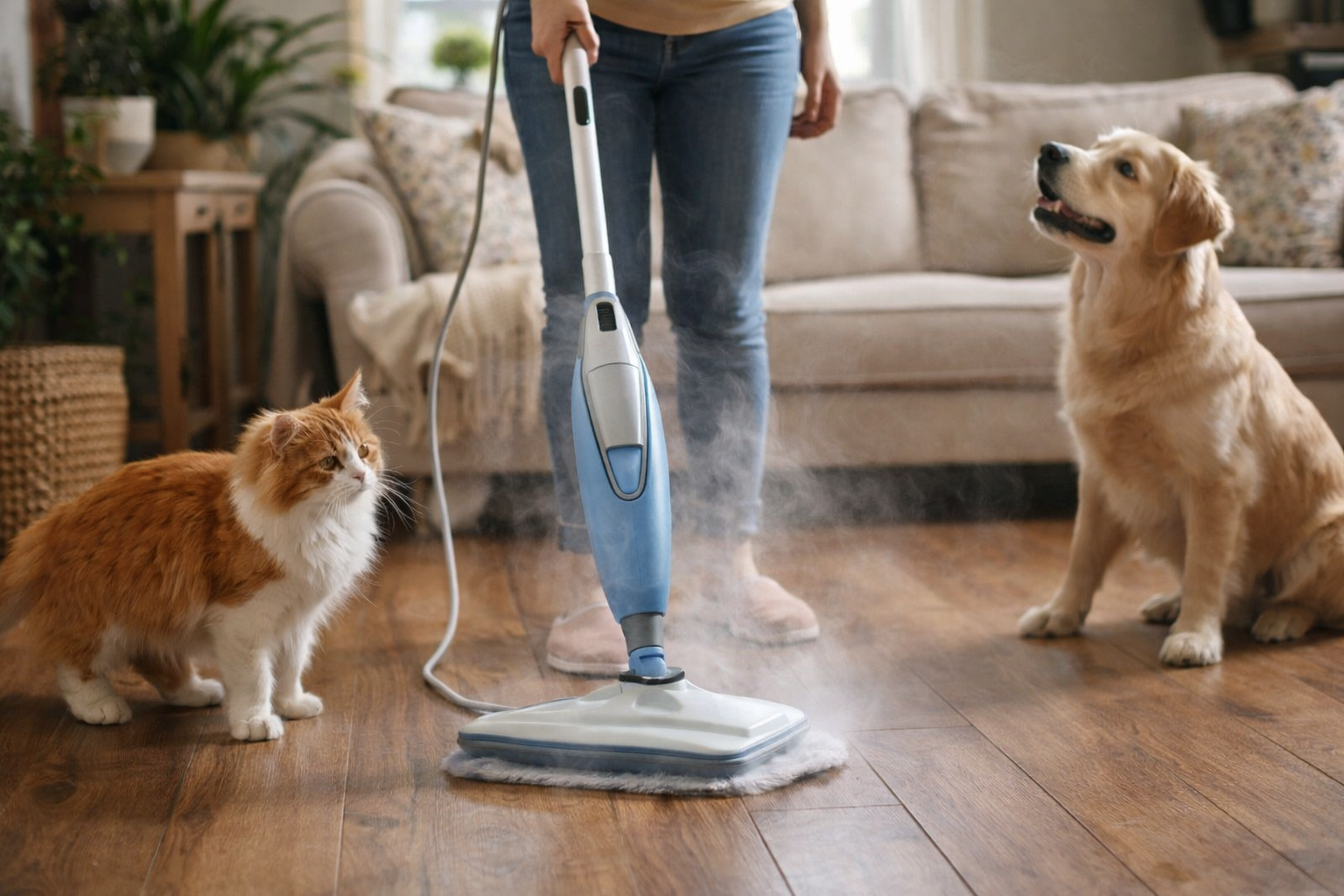
When my steam mop not cleaning properly became a real issue in my home, I honestly thought it was broken. I expected spotless floors — no streaks, no residue, no mystery grime.
No buckets.
No chemicals.
Just steam and clean floors.
But after a few weeks, something felt… off.
The floors looked okay at first, but once they dried, they still felt dirty. Slightly sticky. Dull. Like I’d done a lot of work for very little payoff.
If that sounds familiar, you’re not imagining it. I went through the exact same frustration — and it turns out the steam mop wasn’t the real problem.
I Thought Steam Would Fix What Regular Mopping Didn’t
At one point, I literally searched “steam mop not cleaning properly” because my floors still felt dirty no matter what I tried. Before steam cleaning, I already had issues with floors never feeling truly clean after mopping. Especially in high-traffic areas — the kitchen, entryway, and anywhere my dog likes to nap.
I later realized this wasn’t just a “me” problem. I broke it down more deeply in Why Floors Still Feel Dirty After Mopping, but at the time, I assumed steam would magically fix it.
It didn’t. At least not the way I was using it.
1. I Was Using Way Too Much Steam
This one surprised me the most. I thought: more steam = deeper cleaning In reality, more steam just meant more moisture.
What actually happened:
- Dirt got loosened, but not removed
- Grime spread instead of lifting
- Everything dried back onto the floor
The floors looked clean… until they dried.
What finally worked
I lowered the steam setting and stopped hovering over the same spot. Once I treated steam like a controlled tool instead of a power washer, results improved almost immediately.
2. My Mop Pad Was the Real Villain
Steam mops don’t clean with steam alone — they clean through the pad. And mine? Not great.
I was reusing pads longer than I should have, thinking a quick wash was enough. Turns out, a damp, slightly dirty pad just spreads grime around.
What I changed
- I swap pads mid-clean if they get dirty
- I wash them after every use
- No fabric softener (this matters more than people realize)
That alone made my floors feel cleaner under bare feet.
3. Steam Loosens Dirt — It Doesn’t Remove Everything
This was a big mindset shift for me. Steam is amazing at loosening:
- grease
- dried spills
- surface grime
But it doesn’t magically absorb all of it.
Over time, floors build up detergent residue and cleaning product film. Steam softens it, but if nothing removes it, it just redistributes.
This is also where a lot of confusion comes from about hygiene. Steam can help sanitize, but cleaning and sanitizing aren’t the same thing — something I explain more clearly in Do Steam Mops Kill Bacteria?
Once I separated those ideas, my expectations became a lot more realistic.
4. I Was Cleaning Way Too Fast
I used to push my steam mop like a vacuum. Big mistake. Steam needs contact time.
When I rushed:
- Heat didn’t penetrate
- Dirt didn’t lift
- Moisture evaporated before doing anything useful
Slowing down — just a bit — made a noticeable difference.
5. Not All Floors Respond the Same Way
I have a mix of surfaces in my house:
- sealed tile in the kitchen
- vinyl in the hallway
- older grout near the back door
Steam works great on some of them — and barely at all on others.
On textured surfaces or worn sealants, steam loosens dirt but can’t fully remove it. That’s why grime sometimes feels like it “comes back” after drying. It’s not a broken mop. It’s the surface.
6. Steam Isn’t a Deep-Clean Reset Button
This was the hardest truth to accept. A steam mop is a maintenance tool. It’s fantastic for:
- regular upkeep
- quick refreshes
- keeping floors sanitary between deeper cleans
It’s not meant to undo years of buildup in one pass.
Once I stopped expecting miracles, steam cleaning finally started to make sense.
Why Floors Still Feel Dirty After Steam Mopping
Here’s the short version: If steam loosens dirt but nothing removes it:
- residue spreads
- grime dries back
- floors feel off
That’s why steam mopping can feel disappointing if pads, technique, or expectations are wrong.
When Technique Isn’t the Problem: What Actually Fixes Poor Steam Cleaning
If you’ve cleaned the pads, adjusted the steam level, slowed down your passes, and floors still feel dull or sticky, the problem often isn’t your technique.
In many homes, the issue comes down to how consistent the steam output is and how the pad handles residue, especially on sealed floors.
Features That Make a Real Difference
- Consistent steam output (not bursts)
- Adjustable steam levels for different floor types
- Dense microfiber pads that don’t smear residue
- Fast drying time on sealed floors
What Actually Helped in My Case (and Similar Homes)
In my case, the real improvement didn’t come from changing technique — it came from switching to a steam mop that delivers more consistent steam and maintains proper pad contact with the floor.
After trying different settings and pads, I noticed that floors started to look and feel clean only when I used a steam mop with steady steam output (not short bursts) and dense microfiber pads. A model like the SENMO 14-in-1 steam mop made a noticeable difference — the steam was more even, the pads didn’t smear residue, and the floor dried faster without that sticky feeling.
I also found that a steam mop with adjustable steam levels and a rotating head, like a 7-in-1 1200W steam mop, worked better on sealed floors when I slowed down my passes and let the steam do the work instead of forcing it.
What Finally Made Steam Cleaning Work for Me
Once I:
- used less steam
- kept pads truly clean
- slowed down
- accepted surface limitations
my steam mop stopped feeling useless. It didn’t replace every cleaning method — but it earned its place.
And if you’re now wondering whether steam cleaning is actually better than traditional mopping, or just different, that’s the next logical question. I compare both methods honestly in Steam Mop vs Traditional Mop, based on what actually works in a real home.
If you’re still unsure whether steam cleaning is right for your specific flooring, the surface itself might be the deciding factor. Steam behaves very differently on sealed hardwood, tile, laminate, and vinyl. I break this down in detail in my guide to steam mops for different floor types, where I explain what actually works — and what to avoid — based on real floor materials, not marketing claims.
FAQ
Why is my steam mop not cleaning properly?
The most common reasons are a dirty mop pad spreading residue instead of removing it, too much steam saturating the floor, or moving too fast without giving steam contact time. In most cases fixing one of these three things solves the problem immediately.
Why do my floors still feel dirty after steam mopping?
Steam loosens dirt but the pad has to remove it. If the pad is damp, worn, or washed with fabric softener, it smears residue instead of lifting it. Swap to a fresh clean pad and rewash existing ones without softener — this alone fixes the problem in most homes.
Why do floors look worse after steam mopping?
Usually because too much steam was used. Excess moisture loosens grime but doesn’t remove it — the dirt spreads across the floor and dries back down. Lower the steam setting and slow down your passes to give the pad time to actually pick up what the steam loosens.
How do I get my steam mop to clean better?
Three things make the biggest difference: always start with a clean dry pad, use less steam than you think you need, and move slowly enough for the heat to penetrate. Vacuum or sweep first so steam doesn’t push loose debris around. These changes work faster than buying a new mop.