
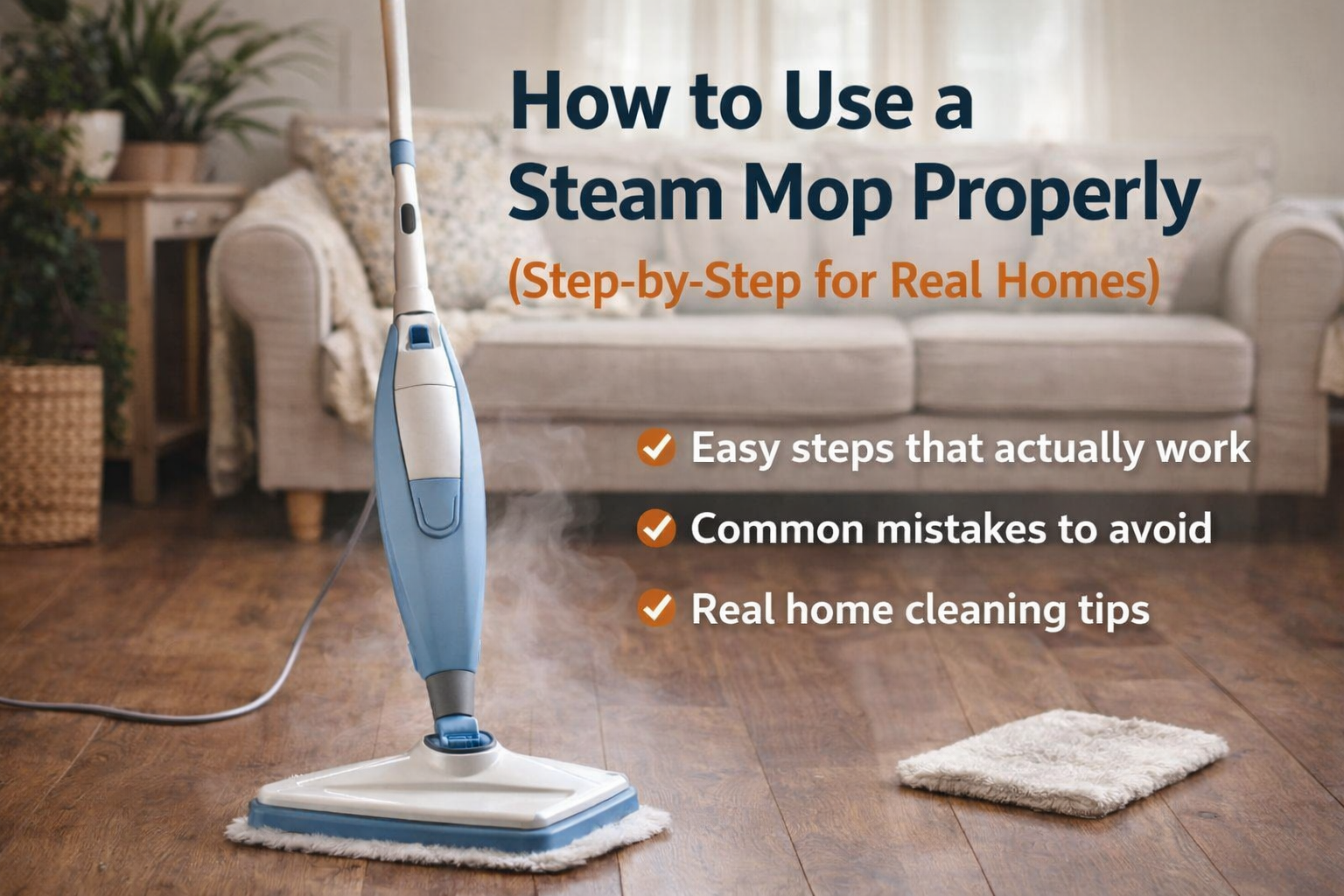
When learning how to use a steam mop properly in my own home, I realized the technique matters more than the machine itself.
Fill it with water.
Turn it on.
Mop the floor.
That’s it… right?
Turns out, that mindset is exactly why my steam mop didn’t work the way I expected at first. My floors looked okay, but they didn’t feel clean. Sometimes they even felt sticky once they dried.
After a lot of trial, error, and frustration, I finally figured out how to use a steam mop properly — in a real home, with pets, everyday messes, and limited time.
Here’s the exact routine that actually works for me.
Step 1: Start With a Clean, Dry Floor
This step is easy to skip — and it matters more than people think. Once I learned how to use a steam mop properly, my floors finally stopped feeling sticky and dull after cleaning.
A steam mop is not a vacuum. If there’s dust, crumbs, or pet hair on the floor, steam will just dampen it and spread it around.
What I do now
- Quick sweep or vacuum first
- Pay attention to corners and high-traffic areas
- Make sure the floor is dry before steaming
Once I started doing this consistently, my results improved immediately.
Step 2: Use the Right Amount of Steam (Less Than You Think)
This was my biggest mistake in the beginning.
I assumed:
more steam = deeper cleaning
In reality, too much steam causes:
- excess moisture
- residue spreading
- sticky floors after drying
What works better
- Use the lowest effective steam setting
- Let the heat do the work
- Avoid holding the mop in one place
Steam should lightly dampen the floor — not soak it.
Step 3: Move Slowly, but Keep Moving
Steam needs contact time, but hovering in one spot isn’t the answer.
When I rushed, dirt didn’t lift.
When I hovered, moisture built up.
The sweet spot is slow, steady movement.
My technique
- Slow passes, no rushing
- Light pressure
- Slightly overlap each pass
This balance made a bigger difference than I expected.
Step 4: Change or Clean the Pad More Often
Steam mops clean through the pad.
If the pad is dirty, you’re not cleaning — you’re redistributing grime.
I used to finish the whole house with one pad. Now I know better.
What I do instead
- Change pads mid-clean if needed
- Wash pads after every use
- Never use fabric softener (it ruins absorbency)
Clean pads = clean floors. There’s no shortcut here.
Step 5: Pay Attention to Your Floor Type
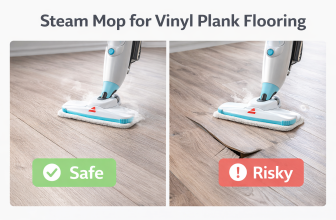
Steam mops are great — but not for everything.
They work best on:
- sealed tile
- sealed stone
- vinyl
- properly sealed hardwood
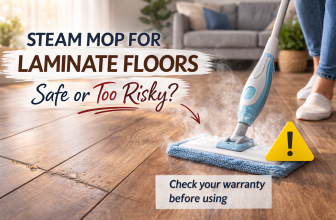
They’re not ideal for damaged sealants, uneven grout, or sensitive flooring.
When I’m unsure, I always test a small, hidden area first. I also put together a full steam mop safety guide by floor type, because this part really matters.
Step 6: Don’t Expect Steam to Replace Deep Cleaning
This was another mindset shift for me.
A steam mop is a maintenance tool, not a reset button.
It’s perfect for:
- weekly upkeep
- quick refreshes
- keeping floors feeling fresh
But it won’t remove years of buildup in one pass.
When my floors feel dull or sticky, I still do an occasional traditional mop — then go back to steam for maintenance. That balance works best in my home. Using a steam mop properly made a bigger difference than changing the machine itself.
Common Steam Mopping Mistakes I Made
If your steam mop isn’t working the way you expected, it’s usually one of these:
- using too much steam
- skipping vacuuming first
- moving too fast
- using dirty pads
- expecting steam to do everything
I go deeper into the reasons behind these issues in this breakdown of common steam mop mistakes, but fixing the technique alone solves most problems.
If your floors still feel tacky even when you’re careful with steam and moisture, the issue may not be the tool itself. Many people experience this problem even without cleaners, which explains why floors can feel sticky after mopping despite looking clean.
How Often Should You Steam Mop?
For me:
- once a week works well for most areas
- high-traffic spots with pets sometimes need more
- deep traditional mopping happens less often
Steam is about staying ahead of messes — not chasing them.
According to Consumer Reports, steam cleaning works best on sealed hard floors when used correctly.
The Bottom Line
Learning how to use a steam mop properly completely changed my results.
Once I:
- used less steam
- slowed down
- kept pads clean
- matched the method to my floors
steam cleaning finally made sense.
It didn’t replace every cleaning tool I own — but it earned its place in my routine.
And if you’re still deciding whether steam cleaning is even worth it compared to regular mopping, Steam Mop vs Traditional Mop breaks down when each method actually makes sense.