
Yes — too much water can damage floors. But damage doesn’t usually happen the moment you mop.It develops when:
- Water sits too long
- Seams stay damp
- Drying is slow
- Over-wetting becomes a routine
Water isn’t automatically destructive. Prolonged moisture exposure is.
Quick answer:
- Hardwood: damaged by repeated over-wetting, not one-time exposure
- Laminate: most vulnerable — cannot be refinished
- Tile: resistant, but grout suffers
- Vinyl: seams and adhesive at risk
Understanding how much is “too much” helps you prevent gradual finish breakdown, seam swelling, and long-term dullness.
Why Excess Water Is More Dangerous Than Dirt
When floors are cleaned properly, moisture should:
- Lightly coat the surface
- Evaporate evenly
- Dry within 30–45 minutes
- Leave no pooling
When too much water is used, evaporation becomes uneven. As water dries, it can:
- Redistribute minerals
- Concentrate cleaner at edges
- Stress the protective finish
- Soften seams
If your floors often look cloudy after drying, that may not be “damage” yet — it could be a moisture imbalance. I explain the optical side of this in our guide on why floors sometimes lose their shine after cleaning.
What Happens Inside the Floor (Not Just On It)
Most people think water damage is visible. But before boards warp or grout darkens, internal stress builds.
Here’s what happens structurally:
1️⃣ Moisture seeps into micro-gaps
2️⃣ Fibers expand slightly
3️⃣ Finish softens under prolonged contact
4️⃣ Repeated cycles weaken structural stability
The surface may look fine — until it doesn’t. One common symptom of over-wetting is cloudy haze after the floor dries, especially on dark finishes.
How Too Much Water Affects Each Floor Type
Different materials respond very differently.
🪵 Hardwood Floors
Hardwood is durable — but it is not waterproof. Even sealed boards allow small amounts of moisture intrusion at:
- Seams
- Micro-cracks
- Edge transitions
Early warning signs of over-wetting hardwood:
- Boards feel slightly raised at edges
- Seams look darker
- Finish looks cloudy after drying
- Subtle cupping begins
If drying takes too long, you’re increasing risk. For safe benchmarks, see our breakdown of how long floors should dry after cleaning.
Advanced moisture damage signs:
- Visible cupping
- Gaps forming later in dry seasons
- Persistent gloss loss
Hardwood damage is often cumulative.
🪟 Laminate Floors
Laminate is more sensitive than hardwood. Its fiberboard core absorbs moisture quickly if seams are exposed.
Signs you’re using too much water on laminate:
- Raised edges
- Peaking joints
- Surface bubbling
- Permanent dull zones
Unlike hardwood, laminate cannot be refinished. Prevention is critical.
🧱 Tile Floors
Tile itself tolerates water well. But grout and subfloor materials may not. Over-wetting tile can cause:
- Dark grout lines
- Damp smell
- Slippery surface after drying
If traction decreases after mopping, it may not be “too clean.” It may be thin film residue. I explain that shift in our article on why freshly cleaned floors can feel unexpectedly slippery.
🧴 Vinyl & LVP
Vinyl resists water — but seams and adhesives do not. Excessive water exposure can:
- Weaken adhesive
- Cause edge lifting
- Leave sticky residue
If the surface feels tacky after drying, that often means moisture allowed cleaner to concentrate unevenly. We cover that pattern in detail in our explanation of what causes floors to feel sticky after mopping.
12 Clear Signs You’re Over-Wetting
Here are practical, real-world indicators:
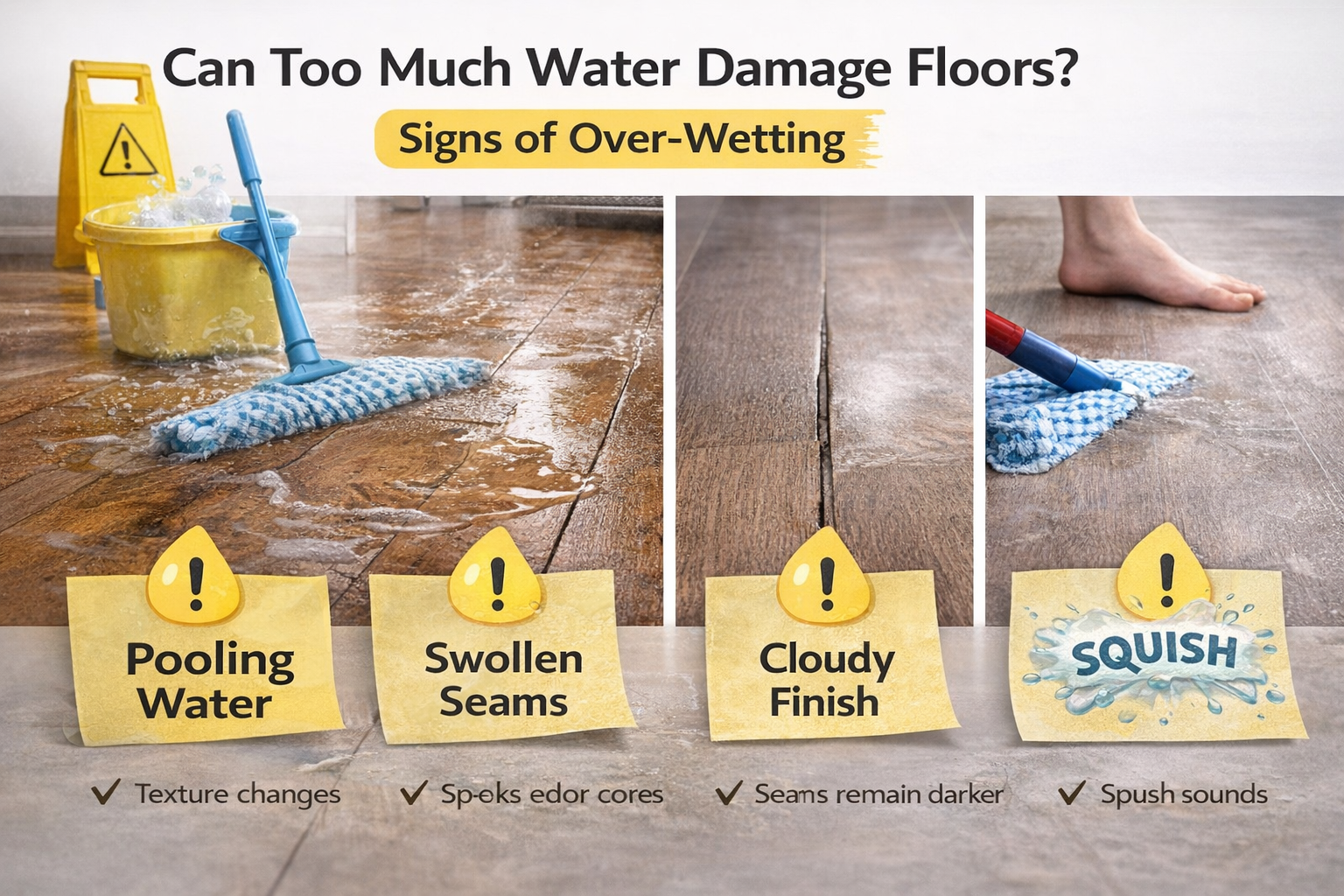
- Water visibly pools
- Mop leaves glossy streaks
- Floor takes over 60 minutes to dry
- Seams remain darker
- Boards feel slightly uneven
- Surface smells damp
- Gloss becomes inconsistent
- Texture changes after drying
- Grout lines stay dark
- Finish looks cloudy
- You hear faint “squish” sounds
- You feel compelled to “dry mop” afterward
If drying exceeds safe windows regularly, the issue is not dirt — it’s technique.
The Drying Time Connection
Excess water and drying time are directly linked. If floors remain wet longer than they should, residue redistribution becomes more likely.
That’s why understanding how long different floor types should realistically take to dry is critical.
Slow drying:
- Increases mineral deposits
- Increases streaking
- Increases finish stress
Drying should feel effortless — not like waiting for rain to evaporate indoors.
Why Floors Feel Rough, Sticky, or Dull After Over-Wetting
Moisture imbalance can trigger multiple sensory shifts. After heavy wetting:
- Minerals may crystallize unevenly
- Cleaner may concentrate at seams
- Finish may temporarily soften
That’s why you sometimes notice:
- Slight grit under bare feet
- Tacky sections
- Uneven shine
If the surface feels textured rather than slick, it may relate to mineral concentration during evaporation. I break that down in our article on why floors can feel slightly rough once they dry.
Over-wetting doesn’t just create one symptom — it can create a chain reaction.
Is One Time Enough to Cause Damage?
Usually no. Severe warping typically requires:
- Prolonged pooling
- Flood-level exposure
- Repeated cycles
However, small repeated over-wetting sessions gradually weaken finishes. Think of it as stress accumulation. Not dramatic — but progressive.
Common Cleaning Habits That Cause Over-Wetting
- Overfilling the mop bucket
- Not wringing microfiber thoroughly
- Using a sponge mop without compression
- Pouring water directly onto floors
- Steam mopping repeatedly without drying control
If your mop leaves visible shine lines, it’s too wet. A properly damp mop should leave the surface slightly cool — not glossy.
Steam mops with adjustable steam control significantly reduce over-wetting risk. We tested the Senmo Steam Mop specifically for hardwood — here’s how it handles moisture.
What to Do If You Think You Used Too Much Water
Immediately:
✔ Increase airflow
✔ Use dry microfiber to absorb surface moisture
✔ Turn on ceiling fans
✔ Avoid foot traffic
✔ Monitor seams over the next 24 hours
Do not apply more cleaner to “fix” the issue. Let it fully dry first.
When to Worry
Call a professional if you notice:
- Persistent cupping
- Peaking laminate joints
- Adhesive lifting on vinyl
- Grout softening
Temporary haze or slickness is usually surface-level. Structural deformation is not.
How to Mop Without Over-Wetting
The safest method:
- Use microfiber
- Dip and wring thoroughly
- Mop small sections
- Buff dry immediately if needed
- Ensure airflow
Your floor should feel:
- Slightly damp
- Not visibly wet
- Dry within 30–45 minutes
If it doesn’t — adjust technique.
A microfiber steam mop delivers controlled moisture better than any traditional mop. See my top picks for hardwood floors.
FAQ
Can too much water damage floors permanently?
Yes, especially hardwood and laminate, if exposure is prolonged or repeated.
How wet should a mop be?
Damp enough to clean — not wet enough to leave pooling.
Why does my floor look worse after drying?
Excess moisture can redistribute residue, altering light reflection and texture.
Can tile be damaged by too much water?
Tile is resistant, but grout and subfloor materials can be affected by repeated over-wetting.
Final Thoughts
Can too much water damage floors? Yes — but usually not instantly.
Damage builds gradually when:
- Water sits too long
- Drying is slow
- Technique remains unchanged
A floor should never look soaked after mopping. Cleaning should leave clarity — not stress.
Control the moisture.
Control the drying.
Protect the surface long term.