
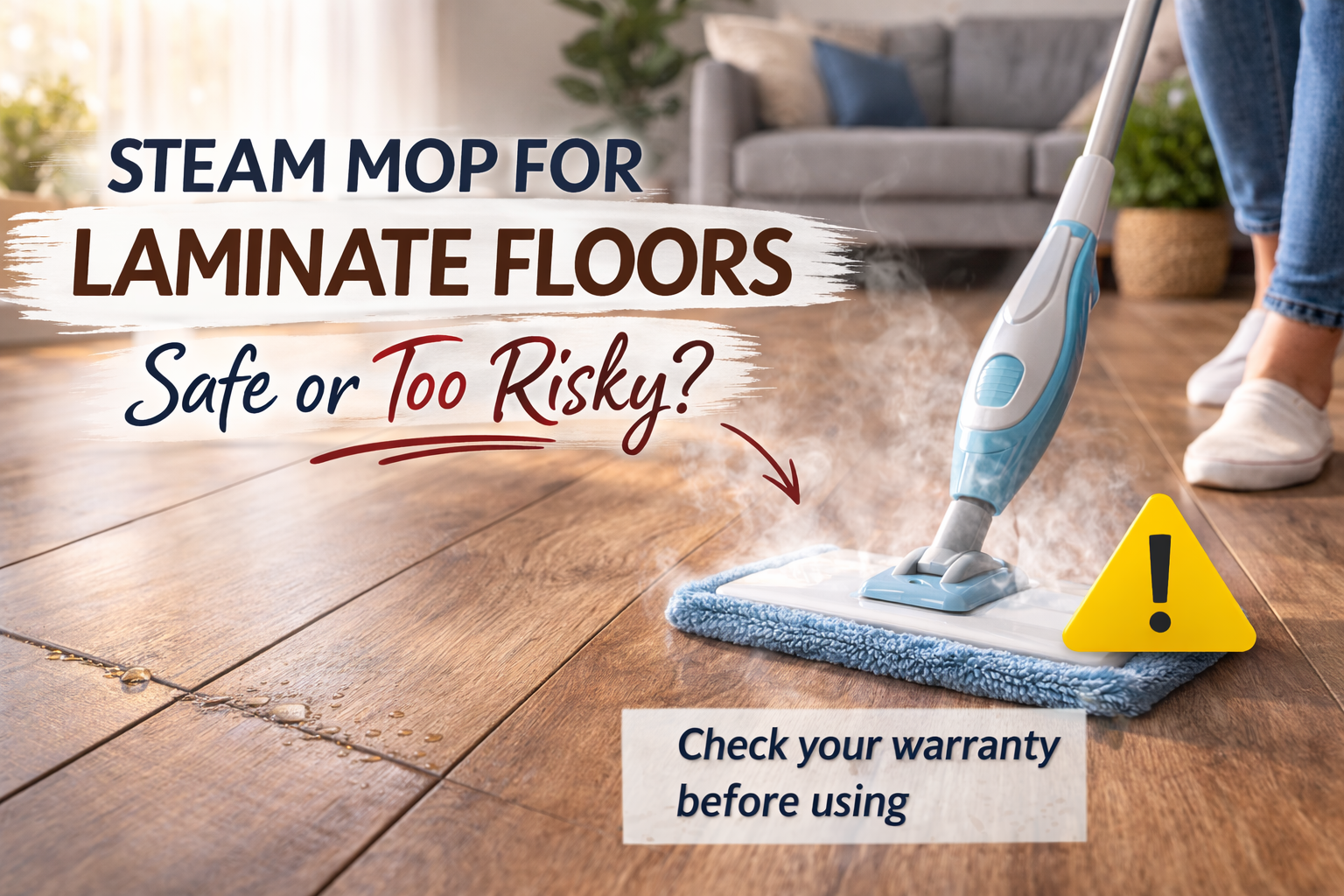
Laminate looks durable. It resists scratches, handles traffic well, and mimics real wood beautifully. But it’s also one of the floors most commonly damaged by steam mops. The reason is simple: laminate has an HDF (high-density fiberboard) core — and HDF swells when it absorbs moisture. Most laminate floors are not fully waterproof, which means steam that reaches seams or edges can cause warping, bubbling, or joint separation. That said, steam mop use on laminate floors isn’t always catastrophic — but it is risky. Here’s the honest breakdown.
Quick Answer
| Situation | Verdict |
|---|---|
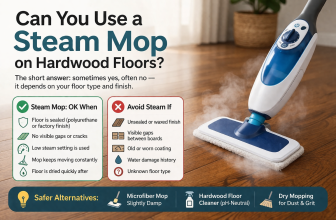
| Sealed laminate, good condition | ⚠️ OK occasionally, lowest setting |
| Laminate with visible gaps or lifting | ❌ Never |
| Older laminate (pre-2015) | ❌ Avoid |
| AC4 / AC5 rated laminate | ⚠️ Low steam, rare use |
| Warranty still active | ❌ Check manual first |
| Daily cleaning | ❌ Use damp microfiber instead |
If you’re asking whether a steam mop for laminate floors is safe for routine cleaning — the answer is no. It’s a last-resort sanitizing option at best.
Why Laminate and Steam Are a Complicated Match
Laminate is layered. The top is a wear layer with a photographic design underneath. Below that sits the HDF core — dense, but moisture-sensitive.
When steam enters seams, the HDF core absorbs it. Swelling follows. Once boards expand, they don’t shrink back perfectly. Joints begin separating. Edges lift.
Steam penetrates faster than regular water because it’s pressurized hot vapor. Even if the surface looks sealed, micro-gaps always exist between planks.
If you want to understand how moisture structurally affects flooring over time, I explain the mechanics clearly in my guide on whether too much water can damage floors. Laminate reacts faster than most materials.
When Steam CAN Be Used on Laminate
If you’re determined to use steam, three conditions must all be true:
- The floor is in excellent condition — no lifting, gaps, or bubbling.
- You use the lowest steam setting available.
- You limit steam to once a month at most.
And even then — risk remains.
Steam mopping laminate flooring is not recommended by most manufacturers. It’s damage control for people who will use steam regardless. It is not the safest cleaning method.
Keep the mop moving. No pauses. No standing vapor clouds. Quick passes only.
What Most Manufacturers Say
This is important.
Pergo, Shaw, Mohawk, and most major laminate brands explicitly state in their warranty documentation that steam mop use voids coverage for warping and joint separation. Steam exposure is often listed alongside flooding as a non-covered cause of damage.
If your warranty is still active, introducing steam could eliminate protection entirely. That’s not a small detail.
Before using a steam mop on laminate floors, check your specific product documentation. Don’t rely on general advice.
Best Steam Mops If You Do Use One
If you still plan to use steam occasionally, choose a model with adjustable steam control and a true low setting. The pad must be microfiber and barely damp — not dripping.
Two models that allow controlled steam levels:
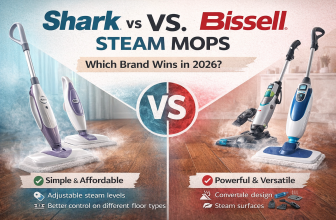
Shark Genius S5003D
Adjustable steam levels, good pad design.

Senmo Steam Mop
Lightweight, controlled output — I tested this one in detail in my Senmo steam mop review.

But remember: even the best steam mop for laminate floors doesn’t eliminate moisture risk. It only reduces it.
What to Use Instead (Safer Options)
Here are safer alternatives:
| Method | Safety | Frequency |
|---|---|---|
| Dry microfiber mop | ✅ Fully safe | Daily |
| Damp microfiber (almost dry) | ✅ Safe | Weekly |
| Spray mop with pH-neutral cleaner | ✅ Safe | Weekly |
| Steam mop (low setting) | ⚠️ Risk | Monthly max |
| Wet mop / string mop | ❌ Dangerous | Never |
| Vinegar or bleach | ❌ Dangerous | Never |
Flat microfiber mops designed for vinyl plank floors also work perfectly for laminate. In fact, the same low-moisture principle applies, which I explain in my guide to choosing the best mop for LVP flooring.
Laminate doesn’t need heavy water. It needs controlled cleaning.
Signs Steam Already Damaged Your Laminate
If steam has already been used repeatedly, look for:
| Sign | What It Means |
|---|---|
| Boards lifting at edges | Core swelling |
| Gaps forming at joints | Expansion damage |
| Surface turning cloudy | Finish stress or residue |
| New squeaking sounds | Subfloor movement |
Cloudiness after steam use is common. Sometimes it’s residue. Sometimes it’s finish damage. I explain how to tell the difference in my article on why floors get cloudy after mopping.
If lifting or joint separation is visible, steam use must stop completely.
How to Clean Laminate the Right Way
Laminate rewards restraint.
- Sweep or vacuum first to remove grit.
- Use a flat microfiber mop that is barely damp.
- Apply a pH-neutral cleaner — never vinegar or bleach.
- Mop along the direction of planks.
- Never allow standing water.
- Let air dry for a few minutes before walking on it.
If you’re unsure how quickly laminate should dry after mopping, I break down realistic drying times by floor type in my guide on how long floors should dry after cleaning. Laminate should feel dry very quickly.
Over-wetting laminate often leads to residue problems too. If your floor feels tacky afterward, I’ve explained the causes in my article on why floors get sticky after mopping.
FAQ
Can you use a steam mop on laminate floors?
Technically yes, but with significant caveats. Laminate has an HDF core that swells when exposed to moisture, and steam penetrates seams faster than regular water. If you use steam, use the lowest setting only, keep the mop moving, and limit it to once a month at most. Most manufacturers void warranties if steam is used.
What happens if you steam mop laminate floors?
Steam can cause the HDF core to absorb moisture, leading to swelling, warping, or joint separation. Surface dullness may also appear. Damage sometimes shows up weeks after repeated steam exposure.
What is the best way to clean laminate floors?
A barely damp flat microfiber mop with a pH-neutral cleaner is safest. Spray the pad, not the floor. Work along the planks. No standing water. No vinegar. Daily dry microfiber removes grit that scratches the surface.
Can you use a Swiffer steam on laminate?
No. Swiffer steam products apply direct heat and moisture, which laminate manufacturers advise against. The dry Swiffer is safe for daily use.
Does steam mopping void laminate floor warranty?
In most cases, yes. Pergo, Shaw, Mohawk, and many others explicitly state that steam mop use voids coverage for swelling and joint damage. Always check your specific warranty documentation.
Final Thoughts
Steam mop for laminate floors is not an everyday cleaning solution. It’s a calculated risk. Laminate simply tolerates steam worse than LVP or tile because its core absorbs moisture.
If your floor is new, sealed, and in perfect condition — low steam once a month may not cause immediate harm. But the long-term risk is real, especially at the seams.
Laminate lasts longest when cleaned gently: dry daily, damp weekly, steam rarely — if ever.
When in doubt, choose less moisture. Laminate always prefers restraint.