
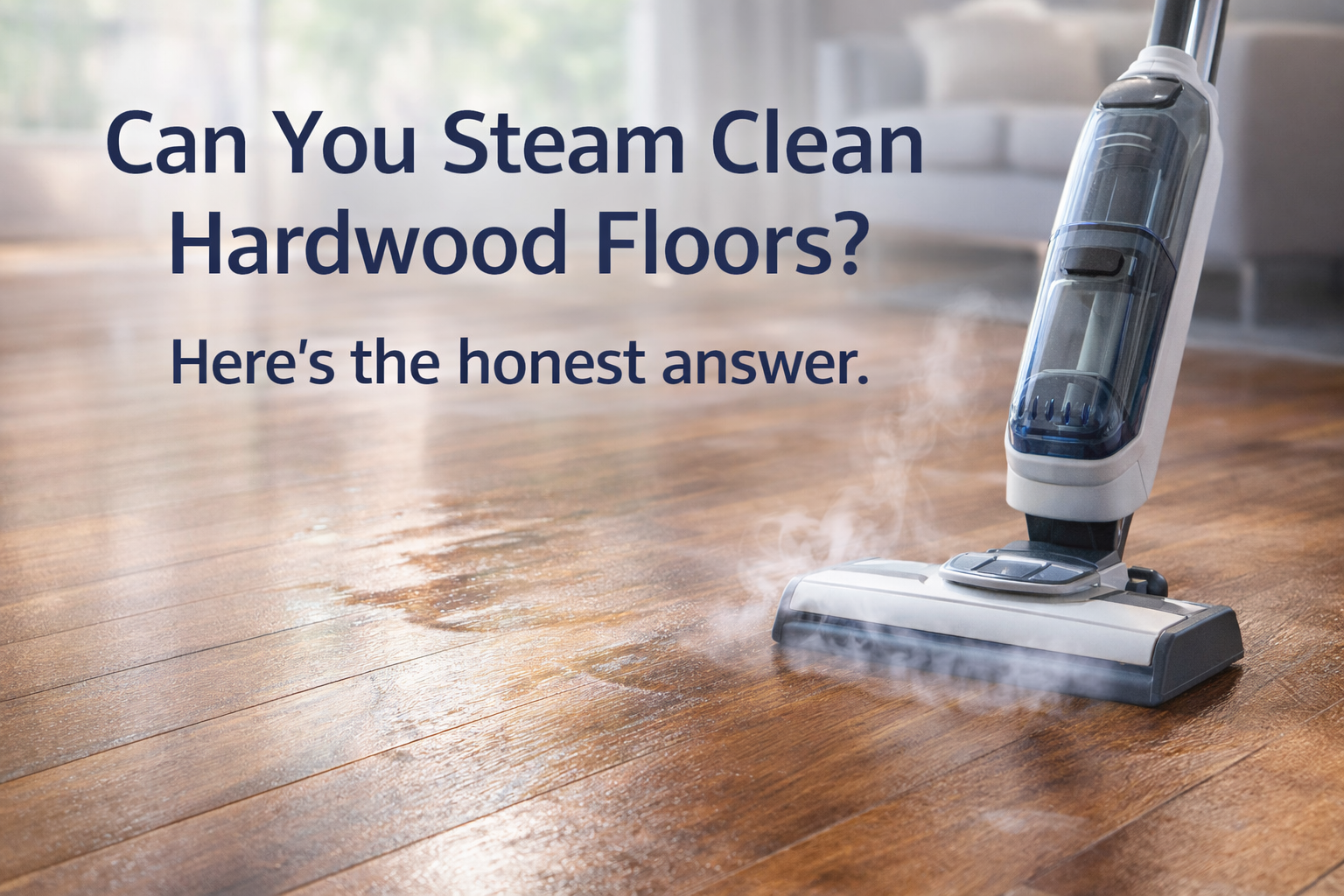
Can you steam clean hardwood floors without damaging them? Many homeowners worry about using steam mops on wood flooring, and the advice online is often confusing.
Some people say steam mops are perfectly safe, while others claim they can ruin hardwood floors completely.
After testing several steam mops on sealed hardwood in my own home, I found the truth is more nuanced. Steam can be safe for hardwood floors, but only under specific conditions.
The type of finish on your floor matters more than anything else. A modern sealed hardwood floor can usually tolerate light steam cleaning, while older or unsealed wood floors can absorb moisture and become damaged.
In this guide, I’ll explain when steam cleaning hardwood floors is safe, when it isn’t, and what to use instead if you want to protect your floors long-term.
The Short Answer
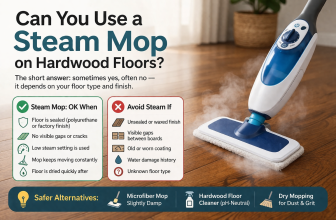
Yes — you can steam clean hardwood floors, but only if the floor is properly sealed.
Steam mops should never be used on unsealed hardwood, oil-finished wood, or older floors with worn finishes, because moisture can penetrate the wood and cause swelling or warping.
For sealed hardwood floors, light steam cleaning with a modern steam mop can be safe when used carefully.
Pros and Cons of Steam Cleaning Hardwood Floors
Steam cleaning hardwood floors has both advantages and risks. Understanding both helps you decide whether it’s the right method for your home.
| Pros | Cons |
|---|---|
| Removes sticky residue quickly | Too much moisture can damage wood |
| Sanitizes floors without chemicals | Not safe for unsealed hardwood |
| Faster than traditional mopping | Some machines release too much steam |
| Good for kitchens and entryways | Can weaken old finishes |
In practice, steam cleaning works best on modern sealed hardwood floors, but it should still be used carefully.
When Steam Cleaning Is Safe on Hardwood
Steam cleaning hardwood floors is generally safe under these conditions:
• The floor has a sealed polyurethane finish
• The steam mop allows controlled steam output
• Steam contact with the floor is brief rather than continuous
• The mop pad absorbs moisture effectively
Modern steam mops release much less moisture than older models, which makes them safer for sealed hardwood.
In my experience, steam mops work best on hardwood floors when you use quick passes rather than holding steam in one spot.
See also: is a steam mop safe on hardwood floors — complete breakdown by floor type.
When You Should NOT Use a Steam Mop
There are several situations where using steam on hardwood floors is risky.
Steam should not be used on these types of floors:
| Floor Type | Steam Mop Safety |
|---|---|
| Sealed hardwood | Usually safe with light steam |
| Engineered hardwood | Often not recommended |
| Unsealed hardwood | ❌ Not safe |
| Oil-finished wood | ❌ Not safe |
| Old or worn finishes | ❌ Not safe |
The biggest risk with steam is moisture penetrating the wood fibers. When that happens, the wood can expand, warp, or develop gaps.
Engineered hardwood floors are especially tricky. Some manufacturers allow steam cleaning, while others specifically warn against it.
If you have engineered flooring instead of solid hardwood, read my guide on how to clean engineered hardwood floors safely, since these floors react differently to moisture.
How to Test If Your Hardwood Is Sealed
If you’re unsure whether your hardwood floor is sealed, there’s a simple way to check.
Place a small drop of water on the floor and wait about 2 minutes.
Here’s what to look for:
• If the water beads on the surface, the floor is likely sealed
• If the water slowly absorbs into the wood, the finish may be worn or unsealed
If the water absorbs into the wood, avoid steam cleaning and use a safer cleaning method instead.
Best Steam Mops for Hardwood Floors
If your hardwood floor is sealed, some steam mops work better than others. These models release controlled steam and have pads that absorb excess moisture.
Bissell PowerFresh Steam Mop
The Bissell PowerFresh is one of the most widely used steam mops for sealed hardwood floors. It offers adjustable steam levels and thick microfiber pads that help prevent excess moisture.
Pros
• Adjustable steam control
• Thick washable pads
• Reliable performance
Cons
• Corded design
• Not ideal for very large homes
If you’re considering a Bissell model, you can read my full Bissell steam mop review where I break down performance, steam levels, and real cleaning results.
Shark Steam Pocket Mop
The Shark Steam Pocket Mop is another popular option for hardwood floors. Its dual-sided pads allow longer cleaning sessions without constantly replacing pads.
Pros
• Lightweight design
• Good steam distribution
• Large cleaning surface
Cons
• No adjustable steam levels
• Corded
For a comparison with another popular brand, take a look at my detailed Shark steam mop review, where I tested how well it handles sealed hardwood floors.
Senmo Steam Mop
The Senmo Steam Mop is a newer option that combines a lightweight design with surprisingly strong steam output.
It’s particularly useful for quick cleaning sessions in kitchens or entryways, where hardwood floors get dirty more frequently.
Pros
• Lightweight
• Fast heat-up time
• Affordable price
Cons
• Smaller water tank
• Shorter runtime
If you want a lightweight budget option, I also tested the Senmo steam mop and shared the full results in my Senmo steam mop review.
What to Use Instead If Steam Isn’t Safe
If your hardwood floors are unsealed, old, or oil-finished, steam cleaning isn’t the best option.
A safer alternative is a spray mop with a pH-neutral hardwood cleaner.
This method uses minimal moisture and reduces the risk of damaging the wood finish.
If you’re unsure whether steam is the right choice, my comparison of steam mop vs regular mop cleaning methods explains when steam actually helps and when it doesn’t.
If you have vinyl flooring instead of wood, check my guide to the best mop for LVP floors, since vinyl surfaces tolerate moisture very differently.
Many homeowners mistakenly treat these floors the same, but they react very differently to moisture.
Final Thoughts
Steam mops are not automatically dangerous for hardwood floors. In fact, they can work well when used on properly sealed hardwood surfaces.
The key is understanding the finish on your floor. If the wood is sealed and the steam mop releases controlled steam, occasional steam cleaning can be safe.
However, if your floors are older, unsealed, or oil-finished, it’s better to stick with low-moisture cleaning methods.
Knowing the difference can help you keep hardwood floors clean without risking long-term damage.
FAQ
Can steam damage hardwood floors?
Yes, steam can damage hardwood floors if the wood is unsealed or the finish is worn. Moisture can penetrate the wood and cause swelling or warping.
Is a steam mop safe for sealed hardwood floors?
Yes, sealed hardwood floors can usually tolerate steam cleaning if the steam level is low and contact time is brief.
How often should you steam clean hardwood floors?
Occasional steam cleaning is usually safe for sealed hardwood floors, but it should not replace regular dry or damp cleaning.
What happens if steam gets into hardwood floors?
If moisture penetrates the wood fibers, the floor can expand, warp, or develop gaps between boards.
What is the safest way to clean hardwood floors?
For most hardwood floors, a microfiber mop with a pH-neutral hardwood cleaner is the safest cleaning method.