
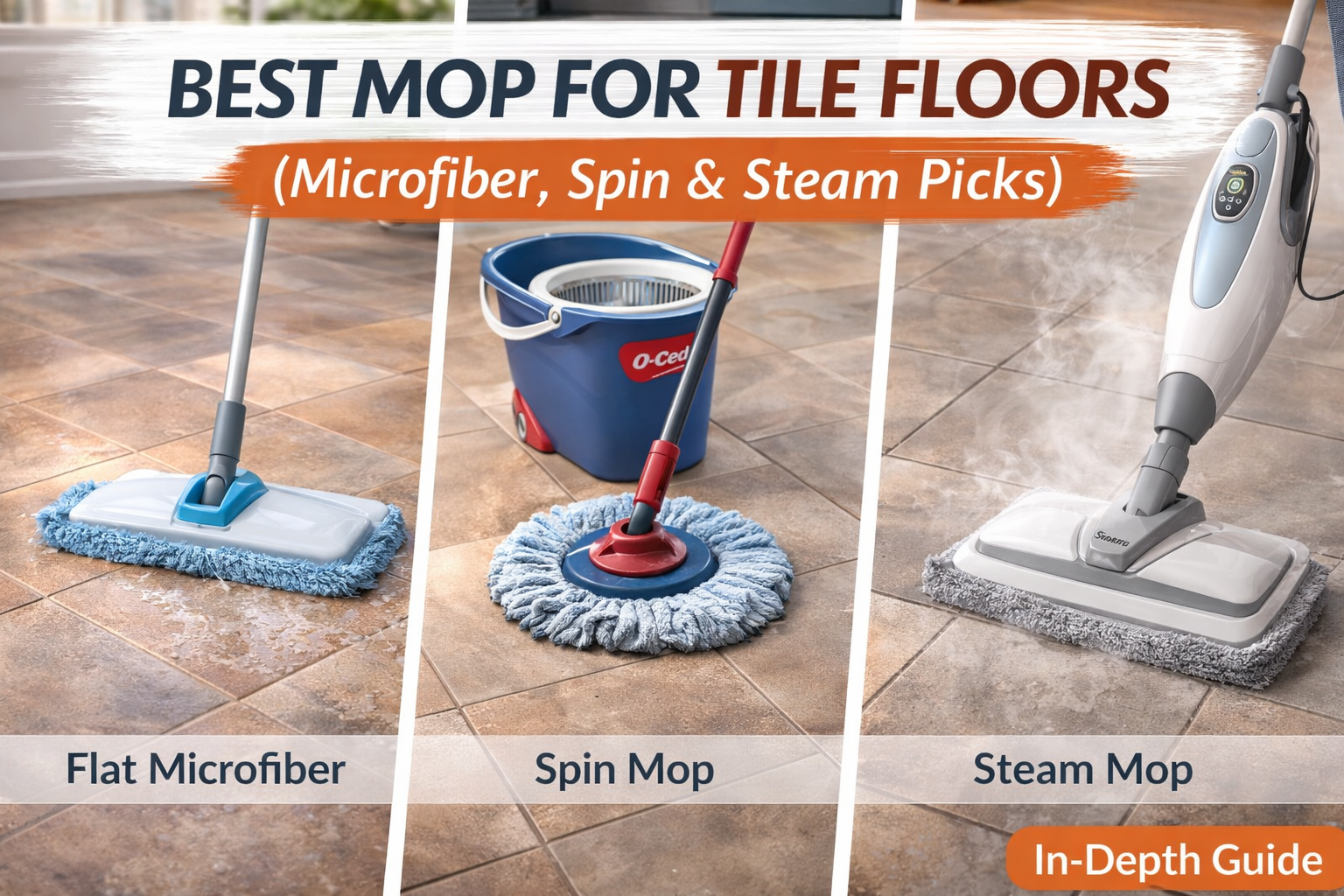
Choosing the best mop for tile floors isn’t just about price — it’s about grout performance and moisture control.Tile is one of the most forgiving floor types to clean — but it’s also one of the easiest to mop wrong. Grout lines trap dirt, most mops push grime around instead of lifting it, and the wrong cleaner leaves a streaky film that looks worse than before you started. The best mop for tile floors does two things well: it reaches into grout lines and actually releases dirt instead of spreading it. I’ve tested different styles on kitchen tile, bathroom floors, and high-traffic entryways — here’s what actually works.
Quick Picks
| Mop Type | Best For | Verdict |
|---|---|---|
| Flat microfiber mop | Everyday cleaning | ✅ Best overall |
| Spin mop | Large areas | ✅ Good for kitchens |
| Steam mop | Deep clean + grout | ✅ Best for deep clean |
| Spray mop | Quick maintenance | ✅ Convenient |
| String mop | — | ⚠️ Old-school, messy |
| Sponge mop | — | ❌ Hard to wring, streaky |
Why Tile Is Trickier Than It Looks
Tile seems simple — it’s hard, waterproof, and durable. But grout is porous. It absorbs dirt and moisture, and most traditional mops push dirty water right into those lines. That’s why tile can look clean at first glance but still feel gritty under bare feet.
Glossy tile also shows streaks easily. If you’ve ever finished mopping only to see cloudy film once it dries, it’s usually cleaner buildup — not the tile itself. The fix isn’t stronger cleaner — it’s better dilution and a mop that actually lifts dirt.
Tile needs good pickup power and a pH-neutral cleaner without wax or oil.
Best Flat Microfiber Mop for Tile
For daily cleaning, a flat microfiber mop is the best mop for ceramic tile floors and porcelain tile alike. Microfiber traps fine particles instead of smearing them around, and the flat head gets tight into corners.
What to look for:
- Washable microfiber pads
- 360° swivel head
- Adjustable handle
- Lightweight frame
Recommended options:
O-Cedar ProMist Max Microfiber Spray Mop
Bona Premium Microfiber Floor Mop
Both allow good control over moisture and don’t oversaturate grout lines.
Best Spin Mop for Tile
If you have a large kitchen or open-plan tile flooring, a spin mop is more efficient. The key difference between a spin mop and a string mop is moisture control. A good spin bucket lets you wring the head almost dry.
Spin mops are especially useful for textured tile surfaces where dirt settles into tiny ridges.
Recommended option:
O-Cedar EasyWring Spin Mop System
After mopping, tile floors should dry fairly quickly. If they stay wet longer than 20–30 minutes, you’re using too much water. I explain realistic drying times by surface type in my guide on how long floors should dry after cleaning.
I tested one affordable model in detail in my full Senmo steam mop review if you want a budget-friendly option for grout cleaning.
Can a Steam Mop Clean Tile Floors?
Yes — and this is where tile really shines.
Unlike hardwood or laminate, sealed tile handles heat and moisture extremely well. Steam penetrates grout pores and loosens embedded grime without chemical residue. If you want sanitizing without harsh cleaners, steam is one of the best tools you can use.
If you’re wondering whether steam actually sanitizes, I break down the science behind it in my article on whether steam mops kill bacteria.
Steam is especially effective in:
- Bathrooms
- Entryways
- Kitchen grout lines
- Pet areas
For deep cleaning, steam is my favorite method on tile.
Best Steam Mop for Tile and Grout
For tile, you want adjustable steam settings and preferably a scrubbing pad or narrow grout tool.
Recommended models:
Shark Genius S5003D
Bissell PowerFresh 1940A
Both allow controlled steam output and come with pads that handle grout texture well. I compare Shark models in depth in my Shark Steam Mop review if you want more details before choosing.
What to Avoid on Tile Floors
| Avoid This | Why |
|---|---|
| Sponge mop | Spreads dirty water into grout |
| Oil-based cleaners | Leave slippery film |
| Regular bleach use | Weakens grout sealant over time |
| Wax-based cleaners | Streaky film on glossy tile |
| Excess water | Can seep under tile if grout is damaged |
If your floors start feeling sticky after mopping, it’s almost always residue buildup — not dirt. I explain that problem fully in my guide on why floors get sticky after mopping.
How to Mop Tile the Right Way
- Sweep or vacuum first — grout traps grit and sand.
- Use a pH-neutral cleaner diluted properly.
- Choose microfiber or spin mop — not sponge.
- Change water once it turns gray.
- Finish with a nearly dry pass to remove residue.
- No standing water — tile tolerates moisture, but grout doesn’t need soaking.
When done properly, tile should dry quickly and look clean without streaks.
FAQ
What is the best type of mop for tile floors?
A flat microfiber mop is the best everyday choice for tile — it lifts dirt and debris without pushing it into grout lines. For deeper cleaning, a steam mop is the most effective option: the heat penetrates grout pores and sanitizes without chemical residue. Avoid sponge mops, which spread dirty water across the surface.
Is a steam mop good for tile floors?
Yes — tile is actually one of the best surfaces for steam mops. Unlike hardwood or laminate, sealed tile handles heat and moisture without risk of warping or damage. Steam reaches into grout lines where regular mops can’t, making it the best option for periodic deep cleaning and sanitizing.
How do you mop tile floors without leaving streaks?
Streaks on tile are almost always caused by too much cleaner or a dirty mop head. Use a pH-neutral cleaner at the correct dilution, wring the mop thoroughly so it’s damp not wet, and finish with a nearly dry pass to pick up any residue. Microfiber heads leave fewer streaks than string or sponge.
How often should you mop tile floors?
High-traffic tile areas like kitchens benefit from damp mopping 1–2 times per week. Bathroom tile once a week is usually sufficient. Daily dry sweeping or vacuuming removes the grit and debris that scratches the surface and makes mopping harder.
What is the best cleaner to use on tile floors?
A pH-neutral floor cleaner diluted in warm water is the safest and most effective choice for most tile. Avoid vinegar on grout — it’s acidic and breaks down grout sealant over time. If your tile looks dull after cleaning, it’s often residue buildup, which I explain in detail in my article about why floors get cloudy after mopping.
Final Thoughts
Tile is one of the easiest floors to maintain — if you use the right tool. For everyday cleaning, microfiber wins. For large areas, spin mops are efficient. And for grout deep cleaning, steam mops are unmatched.
If I had to choose one setup for most homes? A flat microfiber mop for weekly cleaning — and a steam mop once or twice a month to reset grout lines completely.
That combination keeps tile looking new without overcomplicating it.