
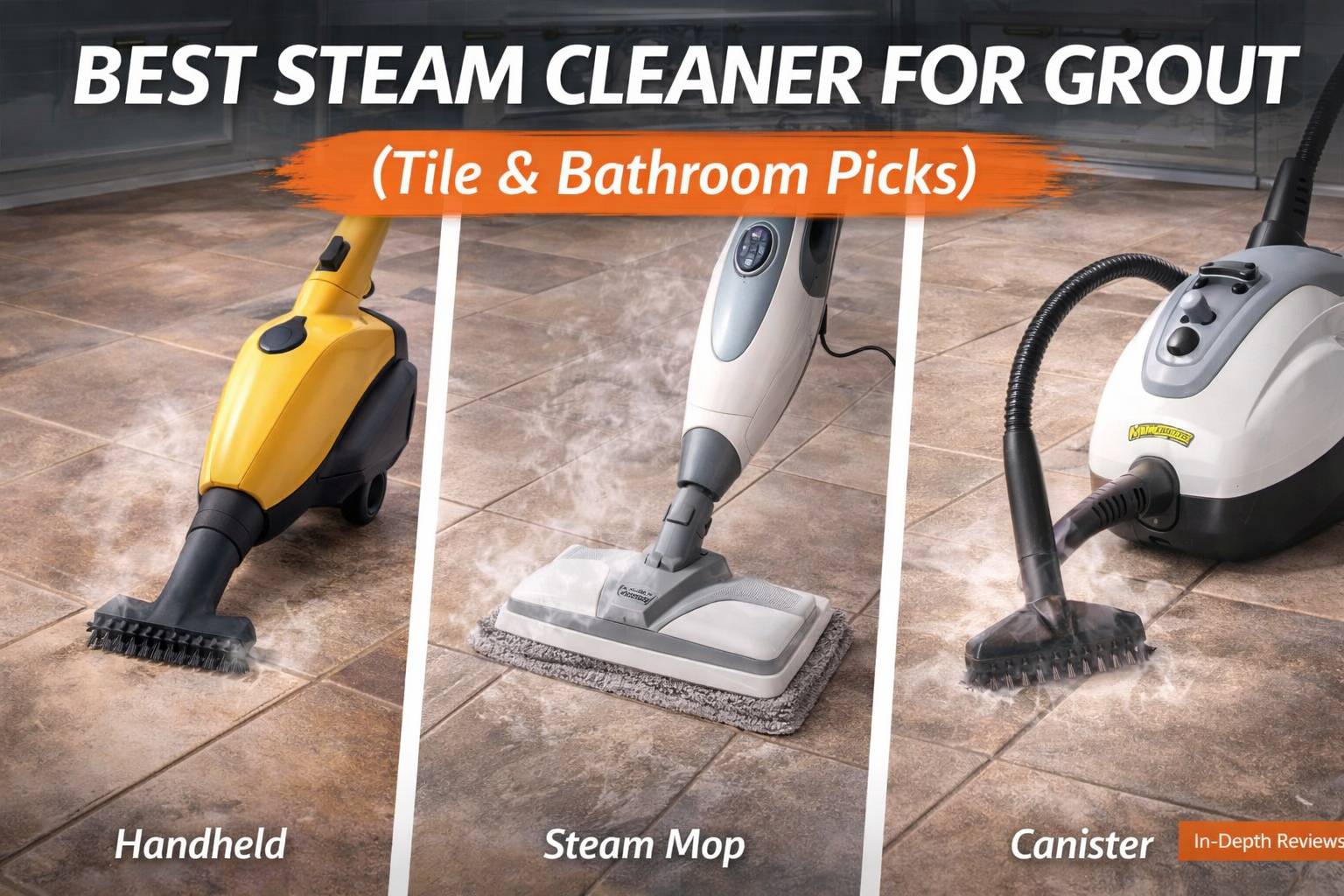
The best steam cleaner for grout isn’t just about power — it’s about directing heat precisely into grout lines without damaging surrounding tile.
Grout is the hardest surface to keep clean in most homes. It’s porous, sits slightly below the tile surface, and traps dirt, soap scum, and bacteria that a regular mop simply pushes around. Chemical cleaners can work — but they require scrubbing, ventilation, and often bleach. Steam is different. The heat penetrates grout pores, loosens grime, and lifts buildup without chemicals and without kneeling on the floor for an hour. If you’re looking for a grout steam cleaner that actually delivers, here are the best options and what to know before buying.
Quick Picks
| Model Type | Best For | Type | Price |
|---|---|---|---|
| Handheld steam cleaner + grout tool | Bathroom grout, tight spots | Handheld | $$ |
| Steam mop with narrow nozzle | Large tile floors | Floor mop | $$ |
| Full-size canister steamer | Whole house + grout | Canister | $$$ |
| Steam mop without grout attachment | — | — | ❌ Not suitable |
Why a Steam Cleaner for Grout Works Better Than Chemicals
Grout is porous. Traditional cleaners mostly sit on the surface and rely on chemicals to break down grime. Steam works differently. At temperatures above 200°F, pressurized vapor penetrates into grout pores and loosens embedded dirt, soap residue, and bacteria.
The heat also helps sanitize without chemical residue, which is important for families with kids or anyone sensitive to strong cleaners. If you’re curious about the sanitizing science, I explain how steam mops kill bacteria in more detail in that guide.
One important condition: grout should be sealed and in good condition. If it’s cracked or unsealed, steam can penetrate deeper than intended and introduce moisture below the tile.
Best Handheld Steam Cleaner for Grout
For bathroom grout lines, kitchen backsplashes, and tight corners, a handheld grout steam cleaner is the most effective option. The narrow nozzle directs concentrated steam directly into the grout line instead of spreading it across the tile surface.
What to look for:
- Narrow grout brush attachment
- At least 50 psi pressure
- Tank capacity 10 oz or more
- Fast heat-up time
Recommended options:
McCulloch MC1230 Handheld Steam Cleaner
Wagner 915e On-Demand Steamer
These models allow precise control and are strong enough to loosen deep grout buildup without chemical assistance.
For bathroom floors with heavy soap scum, handheld steam is usually more effective than a standard flat steam mop.
Best Steam Mop for Tile and Grout
If you’re cleaning large tile floors, a steam mop with a narrow nozzle or scrubbing pad attachment is more practical. It saves you from crawling around with a handheld unit.
The key is attachment design. A wide flat pad alone won’t reach into grout lines effectively. You need either:
- A removable grout tool
- A concentrated steam nozzle
- A scrubbing pad that slightly enters grout channels
Recommended models:
Shark Genius S5003D
Bissell PowerFresh 1940A
I’ve tested budget models in my full Senmo steam mop review, and I also compare Shark’s attachments in detail in my Shark steam mop review if you want a deeper breakdown.
For periodic deep cleaning of grout on tile floors, a steam mop with the right attachment can be extremely effective.
Does a Regular Steam Mop Work on Grout?
This is where many people get disappointed.
A basic steam mop with only a wide microfiber pad glides over tile and releases steam evenly — but it doesn’t direct pressure into grout lines. It cleans the surface but won’t deeply clean grout.
If the model does not include:
- A grout brush
- A narrow nozzle
- Or a scrubbing attachment
…it won’t function as a proper steam cleaner for grout.
In that case, you’re better off using a handheld steamer for precision work. If you’re still comparing tile floor cleaning tools more broadly, I also break down general options in my guide to the best mop for tile floors.
How to Steam Clean Grout — Step by Step
- Sweep or vacuum first — remove loose grit.
- Attach the grout tool or narrow nozzle.
- Allow the unit to fully heat (usually 30–60 seconds).
- Move slowly along grout lines — don’t rush.
- Wipe immediately with a microfiber cloth to lift loosened grime.
- Repeat on darker sections.
- Allow the area to fully dry before walking on it.
Grout should dry fairly quickly after steam cleaning. If floors remain damp for extended periods, that’s a sign of overuse of moisture. I explain normal drying timelines by floor type in my guide on how long floors should dry after cleaning.
What Steam Won’t Fix
This is important.
Steam is powerful, but it isn’t magic.
| Issue | Will Steam Fix It? |
|---|---|
| Dirt buildup | ✅ Yes |
| Soap scum | ✅ Yes |
| Surface mildew | ✅ Yes |
| Permanent staining | ❌ No |
| Cracked grout | ❌ No |
| Deep mold penetration | ⚠️ Limited |
| Unsealed grout damage | ❌ Risk |
Steam will restore grout darkened by dirt and residue. It will not reverse permanent staining from dyes, colored cleaners, or years of neglect.
If grout is cracked, steam will not repair it. If grout is unsealed and deteriorating, introducing moisture can cause further breakdown. In those cases, regrouting or resealing is necessary.
If you’re unsure whether your tile surface is suitable for steam in general, I outline which surfaces should never be steam cleaned in my guide on what floors should you not steam mop.
This honest limitation is what separates a good grout steam cleaner from unrealistic expectations.
FAQ
Does steam cleaning actually clean grout?
Yes — and it’s one of the most effective methods available. Steam at 200°F+ penetrates the porous surface of grout, loosening embedded dirt, soap scum, and bacteria that regular mops leave behind. The key is using a narrow grout attachment that directs steam directly into the grout line rather than across the tile surface.
What is the best steam cleaner for grout?
A handheld steam cleaner with a grout brush attachment is the most effective option for bathroom grout and tight spaces. For large tile floors, a steam mop with a narrow nozzle or scrubbing pad attachment works well and saves you from working on your knees. Avoid steam mops with only a wide flat pad — they don’t reach into grout lines.
Can you use a steam mop on grout?
Yes, but only if the steam mop includes a grout-specific attachment. A standard flat pad glides over tile and doesn’t direct steam into grout lines. Look for models that include a narrow nozzle or a small brush head in the accessory kit. Without this attachment, a handheld steamer will do a better job.
How often should you steam clean grout?
Every 1–3 months for bathroom and kitchen grout is sufficient for most homes. Regular damp mopping in between prevents heavy buildup. High-traffic areas or homes with pets may need monthly steam cleaning to keep grout from darkening.
Will steam cleaning brighten grout?
It depends on why the grout looks dark. If the discoloration is from dirt, soap scum, or mildew buildup, steam cleaning will restore the original color noticeably. If the grout has been stained by dye, permanent markers, or colored cleaning products, steam won’t reverse that — the grout may need resealing or regrouting.
Final Thoughts
Steam is one of the most effective ways to clean tile grout without harsh chemicals — but only when you use the right tool and understand its limits. For tight bathroom grout lines, handheld wins. For larger tile areas, a steam mop with a grout attachment is efficient and practical. And if grout is cracked or permanently stained, steam won’t replace proper repair.
Used correctly, a quality grout steam cleaner can restore grout lines dramatically — without bleach, without fumes, and without scrubbing on your knees.