
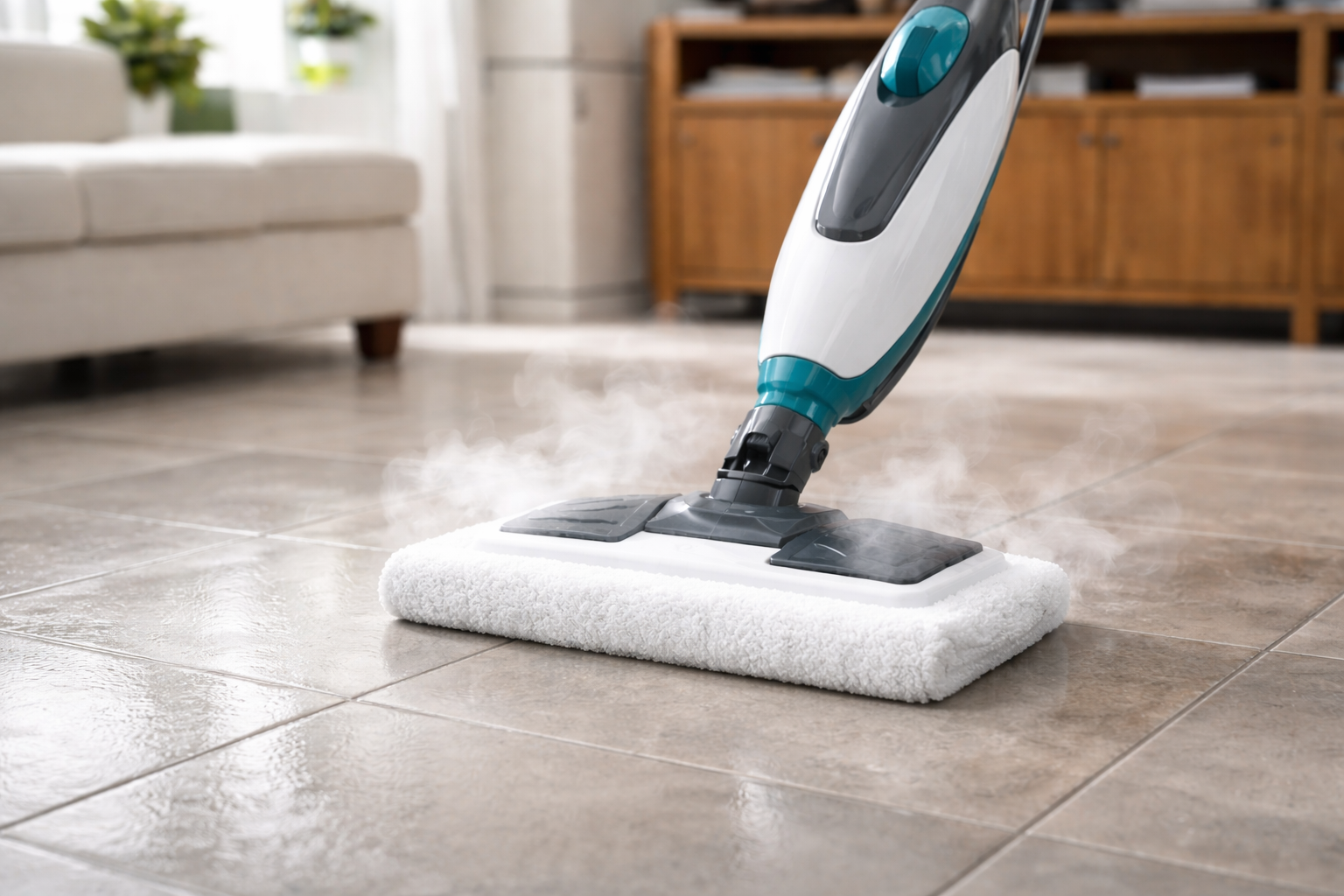
Do steam mops kill bacteria? That was the first question I asked myself when I bought my first steam mop.
I’ll be honest: when I bought my first steam mop, I half-expected two things.
First — shiny, spa-clean floors.
Second — the comforting feeling that I had just wiped out every germ in my house.
What I actually got was something more realistic — and, honestly, more useful.
Steam mops can kill bacteria.
But not in the instant, magical, “everything is sterile forever” way that cleaning ads love to suggest.
And that difference matters more than most people realize.
The short answer (for people who don’t want fluff)
Yes, steam can kill many types of household bacteria — if the temperature is high enough and the steam stays in contact with the surface long enough.
No, a steam mop does not automatically disinfect everything just because steam comes out of it.
How well it works depends on your floor type, steam control, and how you actually use the mop — which is why choosing the right tool matters. I explain how to match steam mops to different surfaces in my complete guide to steam mops for every floor type.
What steam cleaning actually does
Steam mops heat water to very high temperatures — often around 212°F / 100°C at the boiler. When that steam hits the floor, a few things happen:
- Heat damages bacterial cell structures
- Moist heat penetrates grime better than dry heat
- Sticky residues soften and release from the surface
Heat-based reduction of bacteria depends on temperature and exposure time, not just how hot the steam is at the source.
This is also why steam feels different from traditional mopping. Heat changes how oils and residue behave — which explains why floors can still feel dirty after cleaning even when they look perfectly fine.
Why steam can kill bacteria (but doesn’t always)
Think of steam like cooking.
Holding a pan over high heat doesn’t cook food.
Keeping it there long enough does.
Steam works the same way.
Steam mops are most effective when:
- You move slowly, not in quick sweeping passes
- Steam output is steady, not pulsing
- The floor isn’t covered in thick, greasy buildup
If you rush, you’re mostly:
- Loosening dirt
- Pushing bacteria around with a hot, damp pad
That’s still cleaning — just not disinfecting.
This matters even more on sensitive surfaces. On wood, for example, steam exposure isn’t just about hygiene — it’s about moisture penetrating over time, which can quietly cause damage long before you see it. I break down those long-term risks in my guide on how steam affects hardwood floors over time.
What steam mops are actually great at
From real, everyday use — not lab conditions — steam mops shine on:
- Sealed tile
- Sealed hardwood (with care)
- Laminate (manufacturer-approved only)
- Vinyl and LVP
They’re especially good at:
- Breaking down sticky residue
- Lifting grease
- Reducing odors
- Making floors feel clean under bare feet
And yes — reducing bacterial load in the process.
“Reducing” bacteria is not the same as sterilizing, but it’s often enough for normal home hygiene.
What steam mops are not
Let’s clear up a few myths.
Steam mops are not:
- Hospital-grade disinfectants
- A replacement for bleach in outbreak situations
- Guaranteed sterilization devices
Most consumer steam mops are not independently lab-tested to confirm 99.9% germ elimination across all bacteria and viruses in real-world home conditions.
If a box promises “kills 99.9% of germs” without explaining contact time, surface type, or testing method, read the fine print carefully.
The biggest mistake people make (I did this too)
Moving too fast.
I used to steam mop the same way I vacuumed — quick passes, job done in five minutes.
The floors looked clean… but didn’t feel clean later.
When I slowed down, everything changed:
- Less streaking
- Less residue
- Better odor control
- More consistent results
Steam needs contact time. Without it, you’re just applying hot moisture.
Do you still need cleaners?
Sometimes — yes.
Personally, I use:
- Steam alone for routine maintenance
- A mild cleaner occasionally for heavy grime
- Targeted disinfectants only where it actually matters (trash areas, pet accidents)
Steam works best as part of a system, not as a magic replacement for everything.
So… does steam cleaning really kill bacteria?
Yes — conditionally.
- It can reduce bacteria
- It avoids harsh chemicals
- It’s excellent for everyday hygiene
But it isn’t instant, and it isn’t foolproof.
Used correctly, steam mops are one of the most satisfying cleaning tools you can own.
Used incorrectly, they’re just hot water with confidence issues.
FAQ: Steam Mops & Bacteria — What People Really Want to Know
❓ Do steam mops disinfect floors?
Steam mops can reduce bacteria, but they don’t disinfect floors in the medical sense. Results depend on steam temperature, contact time, and how slowly the mop is used. Steam improves everyday hygiene, but it’s not instant sterilization.
❓ Does steam cleaning kill bacteria better than regular mopping?
In many cases, yes. Steam uses heat rather than chemicals, which helps break down residue and bacteria at the same time. Traditional mopping can leave behind moisture or detergent film that reduces the feeling of cleanliness.
❓ How long does steam need to kill bacteria?
Steam needs contact time, not just high temperature. Moving too quickly limits its effect. Slow, controlled passes allow heat to stay on the surface long enough to matter.
❓ Are steam mops safe to use on all floors?
No. Steam is not suitable for every surface. Some floors, especially wood, can be sensitive to repeated exposure to heat and moisture.
❓ Can steam mops damage hardwood floors?
Yes — especially with frequent use. Even if damage isn’t immediately visible, moisture can slowly penetrate finishes and affect the wood underneath over time.
❓ Why do floors sometimes feel sticky after steam mopping?
This usually happens when loosened residue isn’t fully removed or when pads are dirty. Technique, speed, and pad condition all play a role.
❓ What are the real benefits of steam cleaning?
Steam cleaning helps reduce chemical use, break down residue, control odors, and keep floors feeling cleaner between deep cleans.
For many homes, these benefits matter more than full disinfection.
Final thoughts
Steam cleaning works best when you understand both its strengths and its limits. If you want a broader look at the practical advantages of steam beyond hygiene claims alone, it helps to step back and understand what actually makes steam cleaning so effective overall.
Steam won’t turn your kitchen floor into an operating room.
But for real homes, real messes, and real people walking barefoot — it does a lot more than most mops ever will.
Used incorrectly, they’re just hot water with confidence issues.