
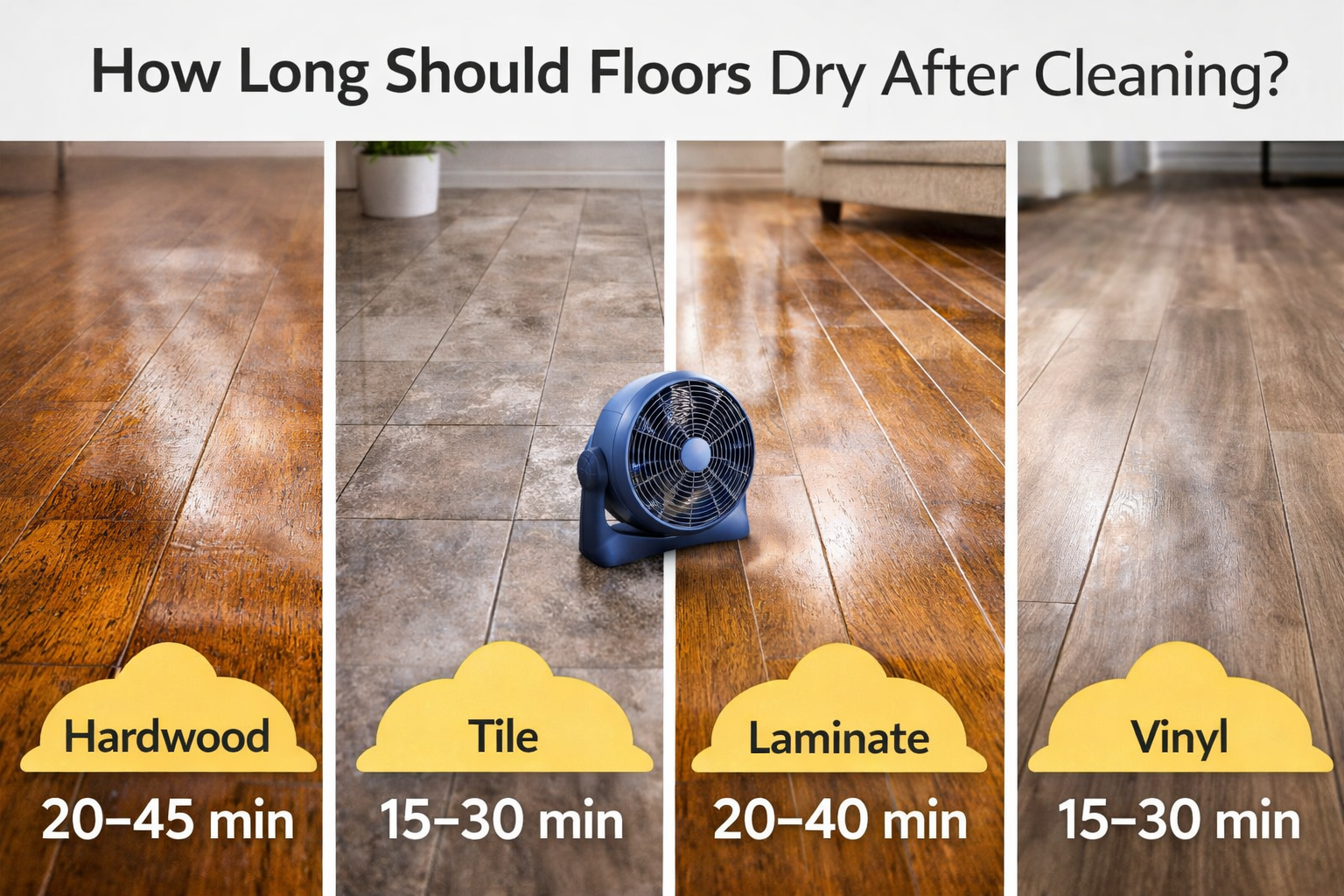
Floor Drying Time at a Glance
How long floors take to dry after mopping depends on the type of flooring, how much water was used, and airflow in the room.
| Floor Type | Safe Drying Time | Walk On After |
|---|---|---|
| Tile & Ceramic | 15–30 minutes | 15–20 min |
| Vinyl & LVP | 15–30 minutes | 15–20 min |
| Laminate | 20–40 minutes | 30–45 min |
| Hardwood | 20–45 minutes | 30–45 min |
| Stone & Marble | 30–60 minutes | 45–60 min |
Most floors should feel completely dry within 45 minutes. If your floors take over an hour to dry, these are often signs you may be using too much water during cleaning.
⚠️ Important: These are averages. Your actual drying time depends on 5 factors — floor type, humidity, airflow, water amount, and mop type. Scroll to your floor type below.
How long does a floor take to dry after mopping depends on the floor type and how much water you used. What happens after mopping — during drying — often determines whether your floors:
- Stay clear and smooth
- Turn dull or hazy
- Feel sticky
- Become slippery
- Develop odor
Why Drying Time Matters More Than You Think
Drying is not just evaporation. As water evaporates, anything dissolved in it stays behind:
- Cleaner concentrate
- Hard water minerals
- Surfactants
- Polymer shine agents
If moisture lingers too long, residue can settle unevenly. That’s how floors end up:
- Looking dull
- Feeling slightly rough
- Becoming tacky
- Losing traction
Drying behavior directly affects long-term surface clarity.
Ideal Drying Time by Floor Type
Different surfaces tolerate moisture differently.
🪵 Hardwood Floors
Ideal drying time:
20–45 minutes
Hardwood is sealed — but not waterproof. Even polyurethane-coated wood can absorb micro-level moisture if exposure is prolonged.
What happens if hardwood stays wet too long?
- Finish softening
- Micro-swelling at seams
- Cloudy appearance
- Uneven sheen
Red flag:
If hardwood remains visibly damp after 60 minutes, too much water was used.
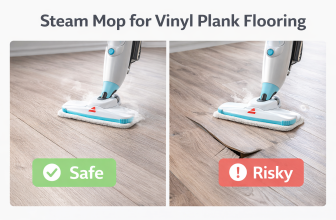
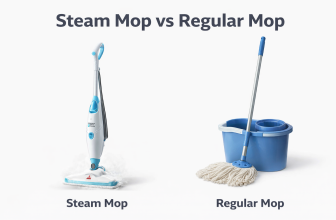
💡 If your hardwood takes longer than 45 minutes to dry, the fix is usually simpler than you think — less water, not a new floor. A steam mop controls moisture precisely and cuts drying time in half. We tested several and found the best safe options here: Top Rated Steam Mops for Hardwood Floors.
🪟 Laminate Floors
Ideal drying time:
20–40 minutes
Laminate is more sensitive than hardwood. It has a printed core with a protective wear layer. Water penetration at seams can cause:
- Edge swelling
- Peaking
- Permanent dull patches
Laminate should never stay wet longer than one hour.
Signs of moisture damage:
- Raised edges
- Bubbling
- Seams darker than surrounding surface
🧱 Tile Floors (Ceramic & Porcelain)
Ideal drying time:
15–30 minutes
Tile itself is non-porous. Grout is not.
If grout lines remain dark longer than an hour, moisture may be trapped.
Slow drying can cause:
- Damp smell
- Mineral film
- Slippery surface
In some cases, the opposite happens and traction decreases. See why freshly cleaned floors feel slippery and how thin film buildup affects grip.
🧴 Vinyl & LVP (Luxury Vinyl Plank)
Ideal drying time:
15–30 minutes
Vinyl is moisture-resistant, but slow evaporation can leave:
- Cleaner haze
- Sticky residue
- Uneven shine
If texture changes instead of shine, mineral deposits may be involved. Here’s why floors feel slightly rough once dry and how evaporation plays a role.
What Slows Down Floor Drying?
Drying time depends on more than material. If drying is slow, residue can settle unevenly — which explains why floors look hazy once they dry.
1️⃣ Humidity
High indoor humidity dramatically slows evaporation.
If relative humidity exceeds 60%, drying time can double.
Moist air can’t absorb much more moisture — so floors stay damp longer.
2️⃣ Airflow
Still air traps moisture near the surface.
Fans, open windows, or HVAC circulation can cut drying time in half.
Air movement matters more than temperature.
3️⃣ Amount of Water Used
This is the most common issue. A properly damp mop should leave:
- No pooling
- No visible streaks
- No bead formation
If you see shine lines of water, too much liquid was applied. Excess water extends drying time and increases residue risk.
4️⃣ Floor Temperature
Cold surfaces dry slower. In winter, especially on tile or slab foundations, drying may take longer even with minimal moisture.
Why Floors Sometimes Feel Different While Drying
During evaporation, surfaces may temporarily feel:
- Slightly slick
- Slightly textured
- Cooler underfoot
This is usually transitional.
But if the sensation remains after full drying, something stayed behind.
If the floor feels tacky once moisture evaporates, excess cleaner may be the reason. Learn what causes sticky residue after mopping and how to prevent buildup.
Drying phase issues often trigger the entire sensory cluster.
How Long Should You Wait Before Walking on Floors?
General guideline:
- Tile & vinyl: 15–20 minutes
- Hardwood & laminate: 30–45 minutes
Walking too early can:
- Create footprint streaks
- Press residue into finish
- Disturb evaporation patterns
If floors are still cool and slightly reflective with moisture sheen, wait longer.
Is It Bad If Hardwood Stays Wet for an Hour?
Yes. While sealed hardwood resists brief moisture exposure, prolonged wetness increases:
- Finish stress
- Seam swelling
- Uneven gloss
Occasional exposure may not cause immediate damage, but repeated slow drying can reduce finish lifespan.
Why Does My Floor Look Worse After It Dries?
This is common. When wet:
- Light reflects evenly
- Surface appears smooth
When dry:
- Minerals remain
- Cleaner film becomes visible
- Light scatters
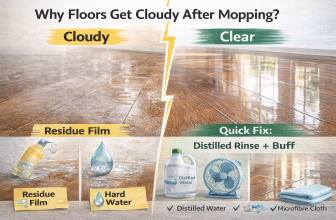
If your floor looks better when wet but dull after drying, residue is likely the cause.
If the surface turns cloudy once fully dry, it may not be a drying issue at all but residue redistribution. That’s explained in detail in our guide on why floors lose shine after cleaning.
How to Speed Up Floor Drying Safely
✔ Use a damp, not wet, mop
✔ Reduce cleaner concentration
✔ Turn on ceiling fans
✔ Open windows when weather allows
✔ Buff high-risk areas with dry microfiber
✔ Avoid over-layering shine products
Do not use:
- Space heaters directly on hardwood
- Heat guns
- Excessive steam
Rapid forced drying can stress finishes.
When Drying Time Signals a Bigger Problem
If floors consistently take more than 60 minutes to dry, ask:
- Am I using too much water?
- Is humidity too high?
- Is airflow poor?
- Is residue layering slowing evaporation?
Film buildup can actually trap moisture longer. If that’s the case, the issue isn’t drying — it’s accumulation.
Common Mistakes That Increase Drying Time
- Overfilling mop bucket
- Not wringing microfiber properly
- Using too much “shine enhancer”
- Not changing dirty mop pads
- Cleaning during high humidity days
Drying should feel effortless — not like waiting for rain to evaporate indoors.
How long should floors dry after mopping?
Most floors dry within 20–45 minutes. Tile and vinyl dry fastest (15–30 min), while hardwood and stone may need up to 45–60 minutes depending on how much water was used.
Why is my floor still wet after an hour?
The most common causes are too much water during mopping, high indoor humidity (above 60%), or poor airflow. Use a damp — not wet — mop and turn on a fan to speed drying.
Can I walk on hardwood floors after 20 minutes?
No. Hardwood needs at least 30–45 minutes. Walking too early can leave footprint streaks and press residue into the finish.
Why does my floor look worse after it dries?
When floors dry, water evaporates but leaves behind minerals, cleaner residue, or surfactants. This creates a film that scatters light and makes the floor look dull or hazy.
Final Thoughts
Drying time is not just a waiting period. It’s the final phase of cleaning — and often the most important.
Most floors:
- Should dry within 30 minutes
- Should never stay visibly wet past 60 minutes
- Should not change texture or smell after drying
If they do, something in the cleaning method needs adjustment.
Moisture leaves. But what it leaves behind determines how your floors look — and how long they last.