
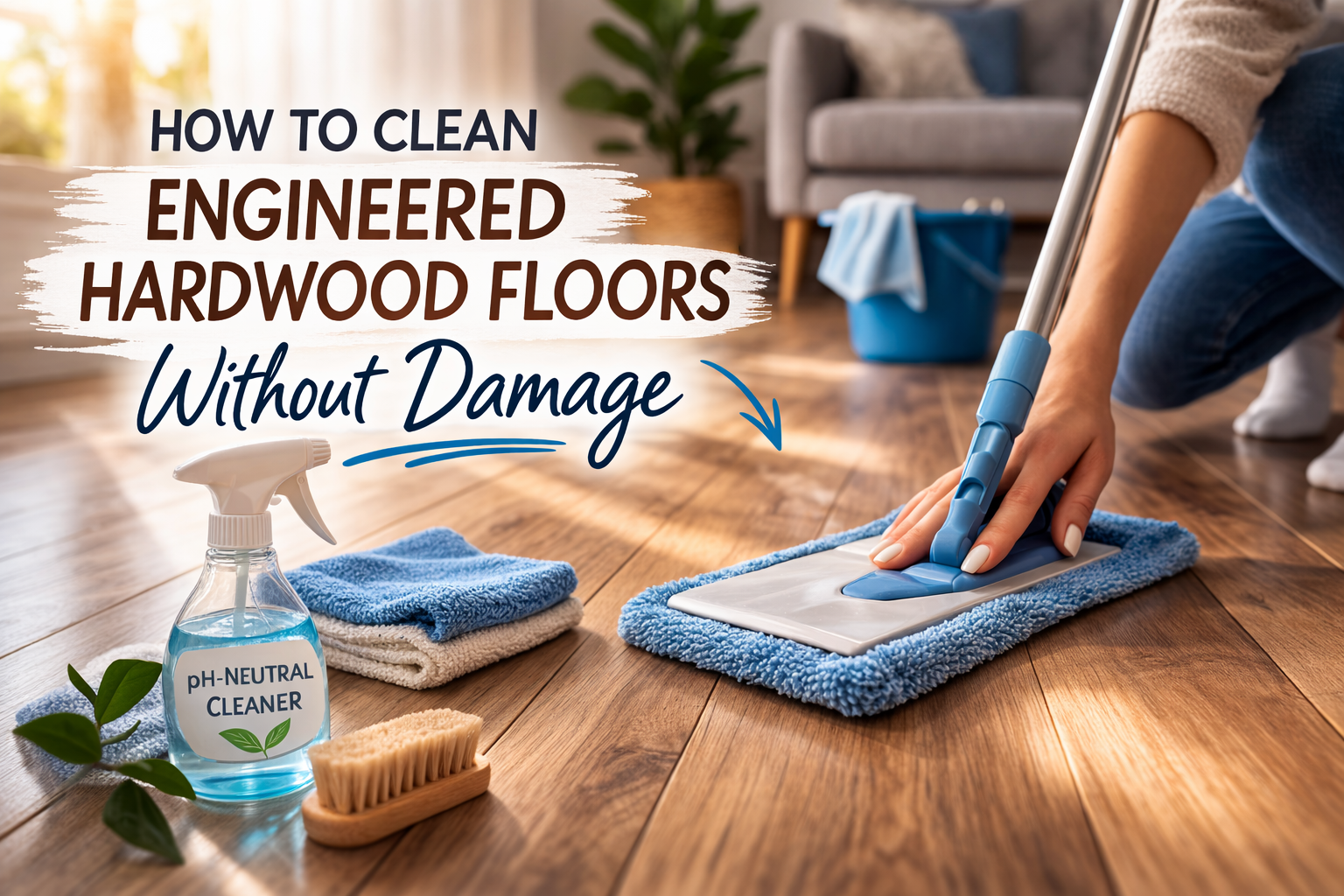
Engineered hardwood looks like solid wood, but it doesn’t behave the same way. And that’s where most mistakes happen. People assume it can handle the same water, the same steam, and the same cleaners as solid hardwood or even tile. It can’t.
The top veneer layer on engineered hardwood is thinner and more sensitive to moisture. Too much water, harsh chemicals, or aggressive steam can slowly break down the finish faster than you realize. The good news? Once you understand how to clean engineered hardwood floors properly, the routine is simple, quick, and doesn’t require expensive products.
Let’s break it down.
Quick Answer
| Method | Safe? | Frequency |
|---|---|---|
| Dry microfiber mop | ✅ Yes | Daily |
| Damp microfiber + pH-neutral cleaner | ✅ Yes | Weekly |
| Vacuum (soft brush only) | ✅ Yes | 2–3x per week |
| Steam mop (low setting) | ⚠️ With caution | Rarely |
| Soaked traditional mop | ❌ No | Never |
| Vinegar or bleach | ❌ No | Never |
If you remember one rule: less water is always better.
What Makes Engineered Hardwood Different
Engineered hardwood isn’t solid wood all the way through. It has a thin real-wood veneer on top (usually 2–6 mm), layered over plywood or high-density fiberboard underneath. That layered structure gives it stability, but the veneer is still vulnerable.
Unlike solid hardwood, you can’t sand engineered flooring many times. The wear layer is limited. Once it’s worn down, refinishing options are minimal.
Moisture is the biggest threat. Water seeps into seams and edges, stressing the veneer and adhesive layers. That’s why cleaning engineered hardwood requires restraint, not force.
Daily Cleaning (2 Minutes)
Daily care is what protects the floor long term. Use a dry microfiber mop or a soft broom. That’s it.
Dust, sand, and pet hair act like sandpaper under your feet. Removing that grit daily prevents micro-scratches that dull the finish over time.
Weekly Cleaning (The Right Method)
Here’s the best way to clean engineered hardwood floors weekly without stressing the surface.
Start with a vacuum that has a soft brush attachment. Avoid beater bars or hard rollers — they can scratch the finish.
Next, use a slightly damp microfiber mop. And I mean slightly. Wring it out until it feels almost dry. The mop should not drip.
Use a diluted pH-neutral wood floor cleaner. Never use concentrate directly on the floor.
Mop along the direction of the boards, not across them. This reduces moisture pushing into seams.
Never leave visible water behind. If you see streaks or moisture trails, go over them with a dry microfiber pad immediately.
If you’re unsure how long the surface should remain slightly damp after mopping, I’ve explained exactly what to expect in my guide on how long floors should dry after cleaning.
Engineered hardwood should feel dry within minutes — not half an hour.
Can You Use a Steam Mop on Engineered Hardwood?
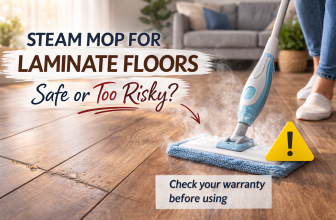
This is the most common question: can you steam mop engineered hardwood? Technically, yes — but with caution.
If you choose to use steam:
- Use the lowest steam setting
- Only on fully sealed floors
- Never on damaged or older boards
- Never more than once a month
- Keep the mop moving constantly
Many manufacturers explicitly warn against steam. Some even void warranties if steam is used. Always check your floor documentation first.
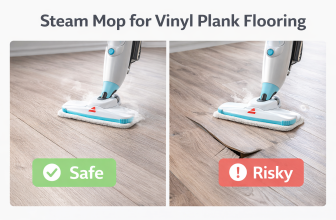
Steam introduces concentrated heat and moisture at seams — the weakest point of engineered hardwood.
If you’re worried about whether steam might slowly weaken the finish, I break down the risks in my article about whether steam mops can damage hardwood floors.
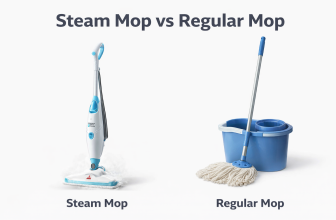
For daily and weekly cleaning, microfiber is safer and just as effective.
What to Avoid
Here are the top mistakes that ruin engineered hardwood:
- Too much water. This is the number one cause of seam swelling and cupping.
- Vinegar. It’s acidic and slowly degrades the protective finish.
- Bleach or all-purpose cleaners. Too harsh.
- Oil-based cleaners. They leave residue buildup.
- Hard bristle brushes or abrasive pads.
- Daily steam use.
- Leaving spills to sit.
If you want to understand why excess moisture is such a problem over time, I’ve explained how too much water can damage floors and what actually happens beneath the surface.
Engineered hardwood tolerates light moisture — not saturation.
Deep Cleaning (Once a Month)
Once a month, you can do a slightly more thorough clean. Start with a detailed vacuum along the grain and along baseboards.
Use microfiber with a slightly stronger (but still diluted) pH-neutral solution.
For tight corners, use a soft toothbrush along baseboards.
Afterward, go over the surface with a dry microfiber pad to remove any remaining moisture.
Deep cleaning doesn’t mean soaking. It means being precise.
Dealing With Stains
Here’s a quick reference:
| Stain | Solution |
|---|---|
| Water spill | Wipe immediately, dry thoroughly |
| Grease / oil | Microfiber + drop of pH-neutral cleaner |
| Gum / wax | Ice to harden → scrape gently with plastic |
| Marker / ink | Small amount of rubbing alcohol (spot treat only) |
| Scratches | Wood touch-up marker |
If your floor starts looking dull after cleaning, it’s usually cleaner buildup or mineral residue — not damage.
If your engineered hardwood looks cloudy after washing, I’ve written a detailed explanation of why floors get dull after cleaning and how to fix residue buildup safely.
Often the fix is simply switching to distilled water and reducing cleaner concentration.
Best Mop for Engineered Hardwood
You don’t need expensive equipment.
The best tools are simple:
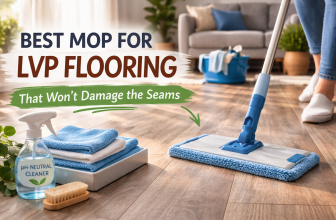
Flat microfiber mop — safest and most versatile.
Spray mop with pH-neutral cleaner — convenient for kitchens.
If you’re still considering a steam option, I tested one carefully in my full Senmo steam mop review and shared where it works — and where it doesn’t.
But again — steam is optional, not essential.
FAQ
Can you use a steam mop on engineered hardwood floors?
With caution. Low steam setting only, on sealed floors in good condition. Many manufacturers void warranties if steam is used — check your floor documentation first. For daily cleaning, microfiber and pH-neutral cleaner is safer and just as effective.
What is the best way to clean engineered hardwood floors?
Dry microfiber daily to remove grit, then weekly cleaning with a barely damp microfiber mop and pH-neutral cleaner. Never use vinegar, bleach, or oil-based cleaners. The less water the better — engineered hardwood is sensitive to moisture at the seams.
Can you use vinegar to clean engineered hardwood floors?
No. Vinegar is acidic and will gradually dull and damage the protective finish on engineered hardwood. Even diluted vinegar can break down the coating over time. Use a pH-neutral cleaner specifically designed for wood floors instead.
How often should you mop engineered hardwood floors?
Damp mopping once a week is enough for most homes. Daily dry microfiber sweeping removes grit that scratches the surface. Deep cleaning with slightly more product can be done monthly. Over-mopping adds unnecessary moisture stress to the seams.
Why do my engineered hardwood floors look dull after cleaning?
Usually cleaner buildup or hard water film — not floor damage. Switch to distilled water and reduce cleaner concentration. If dullness persists after a rinse pass with clean water, the wear layer may be thinning in high-traffic areas.
Final Thoughts
Engineered hardwood isn’t fragile — but it does require thoughtful care. The key is understanding that it’s built differently from solid wood. The top veneer is thinner, the seams matter more, and long-term exposure to moisture has cumulative effects.
Once you adjust your cleaning routine, maintenance becomes straightforward. Daily dry microfiber keeps abrasive grit from scratching the surface. Weekly damp cleaning with a pH-neutral solution removes residue without stressing the seams. Monthly deeper cleaning restores clarity without flooding the floor. Steam, if used at all, should be occasional and carefully controlled.
You don’t need expensive products or complicated systems. In fact, the safest approach is usually the simplest one. Less water. Gentle cleaner. Consistent routine.
When cared for properly, engineered hardwood maintains its appearance for many years. Most damage comes not from neglect — but from over-cleaning.
Clean deliberately, not aggressively. That’s what keeps engineered wood looking like real hardwood — without shortening its lifespan.