I Tried the Senmo Steam Mop to Fix My Floors — Here’s What Actually Happened

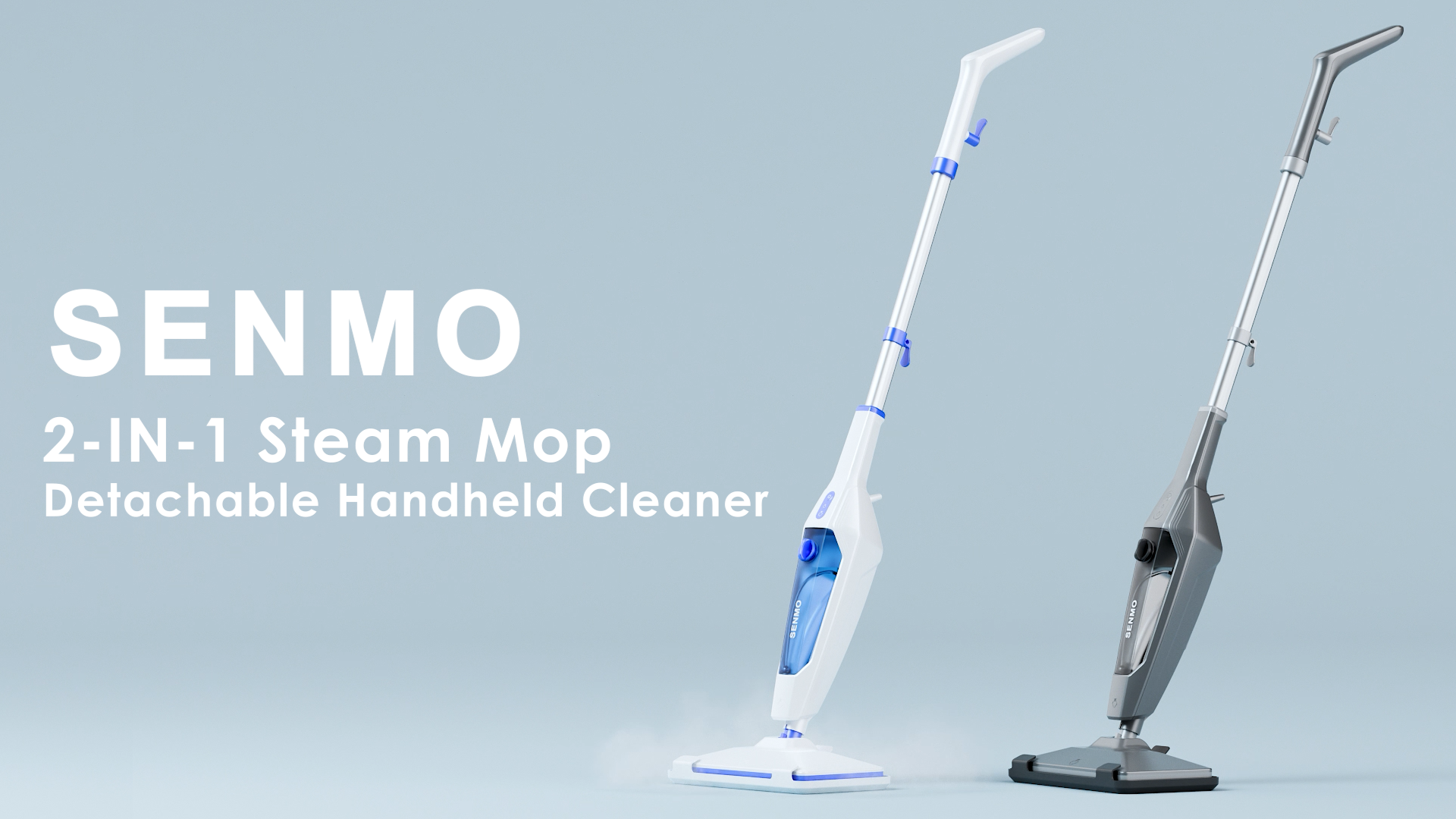
Senmo steam mop review: I tested this lightweight steam mop on hardwood, tile, and laminate floors to see how it performs in real daily use — especially drying time and long-term floor safety.
This review focuses on how the Senmo steam mop actually behaves on hardwood floors, not just specs or marketing claims. For general safety questions about steam cleaning hardwood floors, I cover that separately.
⭐⭐⭐⭐✨ 4.4/5 — Lightweight, fast heat-up, streak-free on hardwood and tile.
If you had walked into my house on a random Tuesday morning last fall, you would’ve found me staring at a floor I cleaned the night before — yet somehow looked dirty again by sunrise.
After months of ignoring it, I finally ordered the Senmo steam mop during a late-night “I just want something simple that works” scroll.
I found the Senmo steam mop while scrolling late at night — the kind of “I just want something simple that works” purchase.
Quick context: this is a hands-on Senmo steam mop review based on real use in my home — not a general steam cleaning guide.
If you’re still figuring out whether steam cleaning makes sense for your floors in general, I’ve broken that down separately here: Steam Mop Benefits: What Makes Steam Cleaning So Effective?
The Day It Arrived (And My Level of Skepticism)
I didn’t open the Senmo box with excitement — more like cautious optimism.
It took me three minutes to assemble. No screws, no deciphering hieroglyphic instruction manuals, no YouTube tutorials. Just click, click — done.
Lightweight. Not plastic-cheap, but light enough that I didn’t have to mentally prepare like I do with my vacuum. A very good start.
My First Test: The Kitchen Floor (aka The Danger Zone)
I don’t know why kitchens are where dirt goes to reinvent itself, but mine is especially dramatic. I filled the Senmo tank with regular tap water, plugged it in, and honestly expected to wait a full minute for it to heat up.
Nope. It took about 20–25 seconds. That was the first moment I thought, “Okay, interesting.”
From a review perspective, this mattered: fast heat-up usually means lighter steam output, which is safer for sealed floors and reduces leftover moisture.
But the real surprise? The steam wasn’t aggressive or overly wet. Sometimes steam mops drown your floor and leave it slippery — this one didn’t. The cloth pad absorbed moisture instead of spreading it around. The glide was smooth. Almost too smooth. Like if cleaning had a therapeutic version, this would be it. And the dirt? Gone. Not smeared. Not “kind of lifted but needs wiping.” Gone.
The kitchen passed the test.
What Shocked Me Most (In the Best Way)
You know when you clean something and assume it just looks clean because the lighting is forgiving?
I turned on the harsh overhead lights expecting to see streaks.
Nothing. Then I opened the blinds — direct sunlight, the real truth-teller.Still nothing. For a budget steam mop, that level of streak-free drying honestly surprised me.
I actually laughed because I didn’t believe one inexpensive tool could make that kind of difference on floors I’ve been at war with for years.But the best part? My house smelled cleaner without smelling like anything. No chemicals. No fragrance. Just… clean.
I didn’t realize how much artificial cleaner smell I had normalized until it wasn’t there.
Senmo Steam Mop: Pros & Cons at a Glance
| ✅ PROS | ❌ CONS |
|---|---|
| Heats up in 20–25 seconds | Small water tank (refill for large rooms) |
| Streak-free on hardwood & tile | Corded only |
| Very lightweight | Narrower mop head |
| Microfiber pads machine washable | |
| Chemical-free clean |
How It Performed on Other Floors
Hardwood
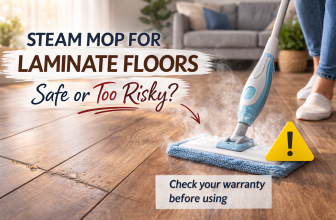
This was the floor I was most careful with during testing. Steam mops can be controversial for hardwood, so I tested carefully. Low steam. Quick passes. The result: clean, dry within seconds, no dulling.
Would I soak hardwood with steam? Absolutely not. But used properly — it was safe and effective.
That said, steam cleaning on hardwood always comes with conditions.
Floor sealing, steam output, and frequency matter far more than the mop itself.
If you’re specifically concerned about long-term hardwood damage and whether steam is ever truly safe, I break it down here: Can steam mops damage hardwood floors?
Tile
This is where the Senmo mop truly thrives. Tile floors looked freshly polished. Grout lines looked lighter. The pad after cleaning? Let’s just say… I questioned my life choices.
Entryway laminate
Handled it easily, didn’t leave streaks, and dried fast.
Bathroom tile
Probably the biggest transformation. Steam cuts through weird bathroom film like nothing else.
The Little Details I Didn’t Expect to Appreciate
These are small things, but they matter in daily use:
- It’s very lightweight, so I didn’t feel like I was wrestling with a lawn mower.
- The cord length is generous (thank you, Senmo).
- The microfiber pads wash beautifully — I’ve put mine through at least 12 washes so far.
- Turning it on and off feels frictionless — no fiddling with settings.
- Steam level is gentle enough for everyday use but strong enough to deep clean.
And honestly, the mental win of not having sticky floors is priceless.
What I Didn’t Love (Because No Product Is Perfect)
- The water tank isn’t huge — for larger homes, you’ll refill once or twice.
- The mop head is more rectangular than wide — great for edges, but takes a few more passes in large rooms.
- It’s corded. Not a dealbreaker, but cordless would be a dream.
That’s it. No major flaws. These are normal limitations of a lightweight, budget-friendly steam mop — not dealbreakers.
Real Results After One Week
My floors stayed cleaner longer.
I cleaned more often simply because the process didn’t feel like a chore anymore.
And my son stopped saying, “Mom, the floor feels weird,” which is honestly the highest praise.
I expected a tiny improvement. I got a genuinely noticeable one.
So, Should You Buy the Senmo Steam Mop?
So, should you buy the Senmo steam mop? If you want a steam mop that:
- heats fast
- is light and simple
- makes your home look and feel cleaner
- doesn’t drown your floors
- doesn’t cost a small fortune
Then yes — I’d absolutely recommend it. Not because it’s perfect. But because it does exactly what real people actually need: a fast, chemical-free, low-effort clean.
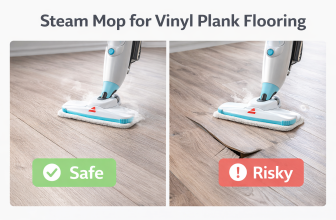
So, not every steam mop behaves the same way on hardwood.
Some models release more moisture, others offer gentler steam that’s easier to control.
💡 Still available on Amazon.
Price and stock change — worth checking now.
A Small Tip If You’re New to Steam Mops
Always vacuum or sweep before steaming.
Steam lifts dirt — it doesn’t replace vacuuming.
But pair the two, and your floors will look like a different house.
This test helped highlight both the strengths and limitations of steam cleaning — especially on delicate floors like hardwood.
If hardwood floors are a big concern in your home, I’ve put together a more detailed breakdown of when steam mops work — and when they don’t: Safe Steam Mops for Hardwood: When It Works & When It Doesn’t
If You’re Curious About Air Quality Too…
If dusty floors drive you crazy, it’s often not just a cleaning issue.
Air quality plays a bigger role than most people realize.
I wrote a simple, no-hype guide about this here: Does an Air Purifier Help With Dust? A Simple, Honest Guide for Real Homes
FAQ
Is the Senmo steam mop safe for hardwood floors?
Yes, if your hardwood floors are sealed. Use the low steam setting, make quick passes, and don’t let steam sit in one spot. Unsealed or wax-finished hardwood should not be steam mopped.
How long does the Senmo steam mop take to heat up?
About 20–25 seconds. This is faster than most budget steam mops and means lighter, more controlled steam output.
Can the Senmo steam mop pads go in the washing machine?
Yes. The microfiber pads are machine washable. After 12+ washes in testing, they still performed well.
Is the Senmo steam mop good for large homes?
It works well but the water tank is small — you’ll need to refill once or twice for larger areas. For homes over 1,500 sq ft, a model with a larger tank may be more convenient.