
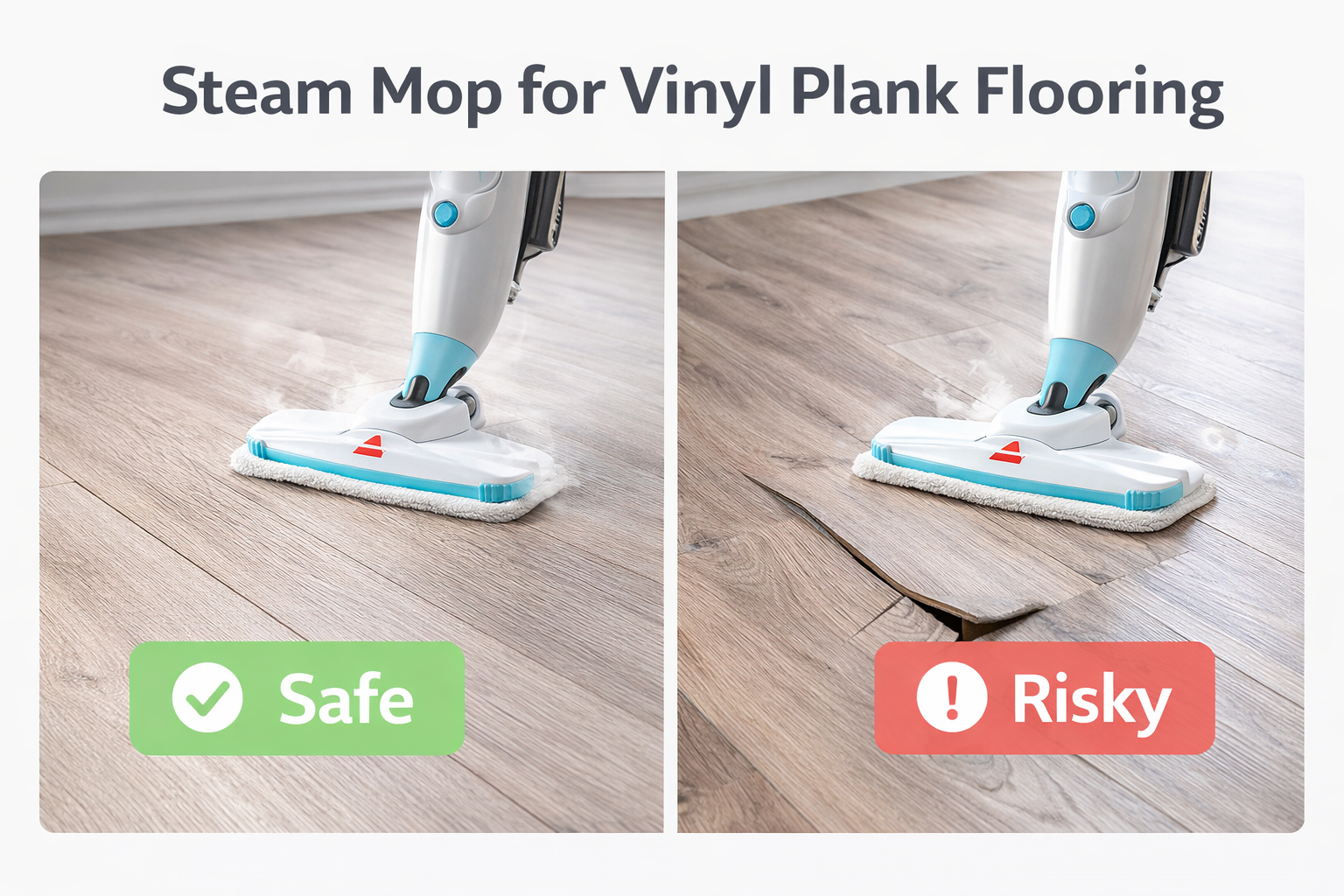
A steam mop for vinyl plank flooring can be either safe or risky — depending on installation, seam condition, and how you use it. Luxury vinyl plank flooring (LVP) is everywhere right now. It looks like hardwood, handles traffic well, and is marketed as “waterproof.” But once people buy it, the fear starts: Can I use a steam mop on this? Will heat ruin it? Will moisture get underneath?
The short answer is not dramatic. Steam can be safe — but only under specific conditions. The risk isn’t the top layer of LVP itself. The risk is heat and moisture getting into seams, edges, or adhesive layers underneath.
In this guide, I’ll walk you through when steam is fine, when it’s risky, how to use it properly, and what to do if your LVP already looks dull or streaky.
Quick Answer
You can use a steam mop on LVP if:
- The floor is fully sealed and properly installed
- There are no gaps, lifted edges, or loose planks
- You use the lowest steam setting
- You keep the mop moving continuously
You should NOT use steam if:
- There are visible gaps or swelling
- Planks are loose or lifting
- It’s glue-down with unknown adhesive
- The floor is old, cheap, or poorly installed
Steam Mop vs Safer Alternatives
| Method | Safety for LVP | Risk Level | Best For |
|---|---|---|---|
| Steam Mop (low setting) | Usually safe if sealed | Medium | Sanitizing |
| Microfiber + pH-neutral cleaner | Very safe | Low | Regular cleaning |
| Spray mop | Very safe | Low | Quick maintenance |
| Soaked traditional mop | Risky | High | Not recommended |
If you want lowest risk overall, microfiber and pH-neutral cleaner win.
1. What LVP Is (and Why Heat & Moisture Matter)
LVP is a layered product. It typically includes:
- A wear layer (protective top surface)
- A printed design layer
- A rigid vinyl core
- Sometimes a built-in underlayment
Click-lock systems rely on tight seams. Glue-down systems rely on adhesive bonding to the subfloor.
The surface itself is water-resistant. The seams and edges are the weak points. If moisture or heat gets into those seams repeatedly, it can cause expansion, lifting, or adhesive breakdown over time.
Steam introduces two variables: heat and concentrated moisture. That’s why technique matters more than the tool itself.
If you’re unsure about your floor type, it’s worth reviewing What Floors Should You NOT Steam Mop before proceeding.
2. When Steam Is Usually OK
Steam is generally fine under these conditions:
- The floor is fully sealed and professionally installed
- No visible gaps or edge lifting
- Low steam setting only
- The mop head is barely damp, not dripping
- Continuous motion — no standing in one spot
Always test a small hidden area first. Steam for 10–15 seconds and check for lifting or texture change.
If used correctly, steam does not usually damage modern click-lock LVP. The key is avoiding moisture accumulation at seams.
If you’re new to steam mopping, it helps to review How to Use a Steam Mop Properly before trying it on vinyl.
3. When Steam Is a Bad Idea
There are clear red flags.
If your LVP already shows:
- Swelling at seams
- Slight cupping or edge curling
- Soft spots
- Loose planks
Steam can worsen the problem.
Glue-down installations with unknown adhesive are also risky. Some adhesives soften under heat. If you don’t know what was used, err on the safe side.
Older or budget LVP can also be more sensitive to heat distortion.
And if your home has large humidity swings, adding concentrated steam may stress expansion joints.
When in doubt, skip steam.
4. How to Steam Mop LVP Safely (Step-by-Step)
If you decide steam is appropriate, here’s how to do it safely:
Step 1: Dry Clean First
Vacuum or sweep thoroughly. Steam is not a replacement for debris removal.
Step 2: Use the Lowest Steam Setting
High steam is unnecessary. LVP does not need aggressive heat.
Step 3: Keep the Mop Moving
Never pause in one spot. Continuous movement prevents localized heat buildup.
Step 4: One to Two Passes Maximum
Overworking an area increases seam exposure.
Step 5: Allow Quick Drying
Open windows or increase airflow. LVP dries quickly, but ventilation helps.
Step 6: Don’t Steam Daily
Steam is for occasional sanitizing, not daily maintenance. For routine cleaning, microfiber with pH-neutral cleaner is safer.
Overusing moisture — even minimal moisture — can stress seams over time. I explain long-term moisture effects more in Steam Mop vs Traditional Mop if you want a broader comparison.
5. Common Mistakes That Ruin LVP
These are the errors I see most often:
- Letting the steam mop sit still
- Using high steam for “extra cleaning power”
- Using a dirty pad that redistributes grime
- Steaming directly along seams and edges
- Assuming “waterproof” means indestructible
Waterproof means surface-resistant. It does not mean seam-proof.
Another common issue is residue. If your floor looks dull afterward, it may not be steam damage at all. It could be leftover cleaner reacting to heat. I cover that in Why Your Steam Mop Isn’t Cleaning Properly and also in Why Floors Still Feel Dirty After Cleaning.
6. If Your LVP Looks Dull or Streaky After Steam
Before assuming damage, check for:
- Cleaner residue buildup
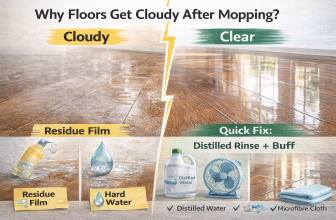
- Mineral film from hard water
- Worn wear layer in high-traffic areas
Try this:
- Swap to a clean microfiber pad
- Use distilled water in your steam mop
- Do one light “rinse pass” with plain warm water and microfiber
Distilled water reduces mineral deposits and streaking. Hard water is often the hidden culprit.
If the dullness persists in one specific area, it may be wear — not steam damage.
7. Best Alternatives to Steam for LVP
For everyday cleaning, steam isn’t necessary.
The safest method for LVP is:
- Microfiber mop
- Warm water
- pH-neutral floor cleaner
Spray mops are also excellent for quick maintenance.
For occasional deeper cleaning, you can:
- Increase cleaner concentration slightly
- Use two-pass cleaning (clean + rinse)
- Use a slightly damp microfiber follow-up
Steam should be considered an occasional sanitizing tool, not the primary maintenance method.
FAQ
Can you use a steam mop on vinyl plank flooring?
Yes, but only under specific conditions. The floor must be fully sealed, properly installed, with no gaps or lifting edges. Use the lowest steam setting and keep the mop moving continuously. If your LVP has loose planks, swollen seams, or unknown adhesive, skip steam entirely.
Can steam loosen LVP glue or cause planks to lift?
It can. Some adhesives — especially older or unknown glue-down installations — soften under repeated heat exposure. Click-lock systems are generally more tolerant, but standing steam in one spot increases risk at seams regardless of installation type.
What’s the safest way to clean vinyl plank flooring?
Microfiber mop with warm water and a pH-neutral floor cleaner. Spray mops also work well for quick maintenance. Steam is optional for occasional sanitizing — not recommended as the primary daily cleaning method for LVP.
Why does my LVP look dull or streaky after steam mopping?
Usually mineral deposits from hard water or cleaner residue reacting to heat — not steam damage. Try switching to distilled water in your steam mop and do one light rinse pass with a clean microfiber pad. If dullness is in one specific area, it may be wear layer damage.
How often can you steam mop LVP floors?
Occasionally — not daily. Steam is best for periodic sanitizing, not routine maintenance. Repeated heat and moisture exposure at seams over time increases the risk of expansion and adhesive stress, even on well-installed LVP.
Final Thoughts
Steam on LVP isn’t automatically dangerous. It’s conditional.
If your floor is properly installed, sealed, and in good condition, low steam with good technique is usually safe. If there are gaps, lifting, or unknown adhesive, skip steam.
LVP is durable — but it’s not immune to heat and moisture at the seams.
Clean smarter, not hotter.