
The steam mop vs regular mop question usually comes up at a very practical moment. Your old mop smells tired. The bucket feels like a chore. Or maybe you’ve seen someone glide a steam mop across tile and thought, “That looks easier.”
I’ve used both in real life — sealed hardwood, tile kitchen, muddy paw prints, everyday spills. And here’s the honest truth: neither tool is universally better. They clean differently. They dry differently. And they behave differently depending on the floor under your feet.
If you’re trying to decide whether to upgrade to steam or stick with a traditional mop, here’s the clear breakdown.
Quick Answer
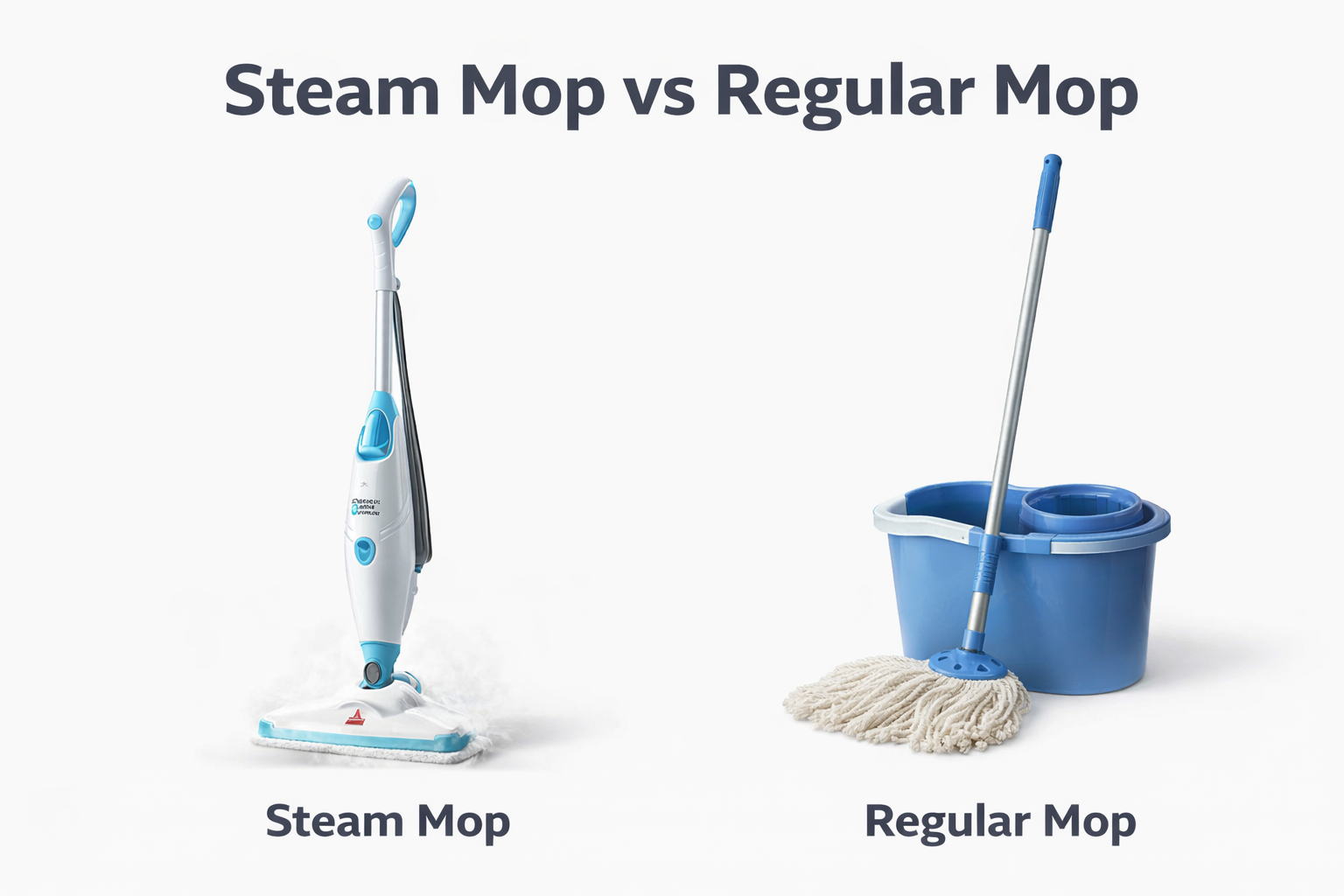
Here’s the side-by-side comparison that makes it simple:
| Steam Mop | Regular Mop | |
|---|---|---|
| Kills bacteria | ✅ Yes (no chemicals needed) | ❌ Mostly redistributes dirty water |
| Safe for hardwood | ✅ If sealed | ✅ Yes |
| Drying time | 1–2 minutes | 20–45 minutes |
| Cost | $50–150 | $15–40 |
| Chemical-free | ✅ Yes | ❌ Requires cleaner |
| Best for | Tile, sealed floors | All floor types |
If you want faster drying and chemical-free sanitation, steam wins.
If you want low cost and universal compatibility, the regular mop still makes sense.
But there’s more nuance than that.
How They Actually Clean
A regular mop works through water, cleaner, and friction. You loosen dirt, absorb it into the mop head, rinse, and repeat. It’s simple, predictable, and has worked for decades.
A steam mop uses high heat to loosen grime and sanitize. Instead of soaking the floor, it releases vapor that breaks down residue while using very little standing water.
That moisture difference is one of the biggest practical distinctions. If you’ve ever wondered how long floors should dry after cleaning, traditional mopping can leave surfaces damp for 20–45 minutes depending on airflow. Steam mops usually dry in one to two minutes because they don’t saturate the surface.
That faster evaporation can actually reduce long-term moisture stress on sealed floors.
Do Steam Mops Really Clean?
This is one of the most searched questions: do steam mops really clean?
Yes — when used correctly.
Steam reaches about 212°F (100°C). At that temperature, it can kill up to 99.9% of common household bacteria. That’s why steam is used in medical and commercial environments. In a home, it provides sanitizing power without detergent.
But steam doesn’t replace vacuuming. You still need to remove loose debris first. Steam sanitizes and loosens grime; it doesn’t magically absorb pet hair or crumbs.
Another important point: steam can reveal old buildup. If your floors suddenly look hazy after using a steam mop, the problem is usually pre-existing residue reacting to heat. I explain that more in my guide on why floors get cloudy after mopping. Steam often exposes what regular mopping leaves behind.
When a Regular Mop Wins
Despite the advantages of steam, there are clear scenarios where a traditional mop is the safer choice.
Unsealed or Waxed Floors
Steam should never be used on unsealed hardwood. Heat can drive moisture into exposed wood fibers, leading to swelling or cupping over time. The same caution applies to waxed finishes, which can dull under heat.
If you’re unsure about your floor type, it’s worth reviewing which floors you should not steam mop before deciding.
Very Large Spaces
Steam mops have small water tanks. In a large open floor plan, you may need to refill multiple times. A bucket system can sometimes be more efficient if you’re cleaning thousands of square feet at once.
Budget Constraints
A microfiber mop and bucket are inexpensive and reliable. If you clean occasionally and don’t mind using a mild cleaner, a regular mop is perfectly adequate.
Heavy Surface Soil
If a floor is extremely dirty, you may need the flushing action of a traditional mop first. Steam works best as maintenance or moderate deep cleaning, not as a replacement for scrubbing caked mud.
When Steam Clearly Wins
There are also situations where steam is the obvious upgrade.
Tile and Grout
Grout lines trap grease and bacteria. Steam penetrates those pores more effectively than a traditional mop. Kitchens and bathrooms show the most visible improvement with steam.
Homes With Pets or Kids
If you’re cleaning paw prints daily or dealing with food spills, steam reduces chemical residue and dries quickly. That speed matters in busy households.
Sealed Hardwood
On properly sealed hardwood, steam can be both effective and safe — if you keep the mop moving. The key is avoiding concentrated moisture in one spot. Excess water, whether from a bucket or steam, can cause damage over time. I explain that risk in detail in can too much water damage floors.
Ironically, a poorly wrung regular mop can leave more water behind than a steam mop used correctly.
Chemical-Free Cleaning
If you’re trying to reduce chemical exposure at home, steam is appealing. No detergents. No scent residue. Just heat and microfiber.
That’s often the deciding factor for people asking, is a steam mop worth it?
Maintenance & Long-Term Use
Steam mops require occasional descaling depending on your water quality. Regular mops require washing or replacing mop heads. Neither is maintenance-free.
From a durability standpoint, both systems can last years if used correctly. The difference is mostly in convenience and workflow.
One thing I’ve noticed personally: steam encourages more frequent cleaning because it feels easier. That habit alone can improve overall floor appearance.
Is a Steam Mop Worth It?
So, is a steam mop worth it?
It usually is if:
- Your floors are sealed
- You clean weekly or more
- You want faster drying
- You prefer avoiding chemical cleaners
It may not be worth it if:
- Your floors are unsealed or waxed
- You clean rarely
- You’re on a tight budget
In my home, I use both. The regular mop stays in rotation for delicate surfaces and occasional deep scrubbing. The steam mop handles weekly tile and sealed hardwood cleaning because it’s faster and leaves less moisture behind.
It’s not about replacing one completely. It’s about matching the tool to the surface.
If You’re Leaning Toward Steam
If you’ve decided a steam mop fits your home better, I’ve tested several models across hardwood, tile, and laminate.
Start here:
→ Senmo Steam Mop Review (budget-friendly option that performs surprisingly well)
→ Top Rated Steam Mops for Hardwood Floors (full comparison guide with tank sizes, steam control, and real-world performance)
Those guides go beyond specs and focus on actual use in real homes.
FAQ
Is a steam mop better than a regular mop?
It depends on the floor. Steam sanitizes and dries faster. Regular mops are more versatile for delicate surfaces.
Do steam mops really clean floors?
Yes. High-temperature steam kills most common household bacteria, but vacuuming first is still necessary.
Can I replace my regular mop with a steam mop?
If your floors are sealed, often yes. But it’s wise to keep a traditional mop for unsealed or specialty finishes.
Is a steam mop worth the money?
For households with sealed floors and frequent cleaning needs, it usually is. For delicate flooring or limited budgets, a regular mop may be enough.
Final Thoughts
The steam mop vs regular mop debate isn’t about hype. It’s about floor type, moisture control, and lifestyle.
Steam gives you speed and sanitation.
A regular mop gives you simplicity and universal safety.
Choose based on your floors — not trends.