Steam Mops for Every Floor (2026 Guide): Safe Picks, Real Use & How to Choose


Quick answer
A steam mop can be a practical cleaning tool if you choose one that matches your floor type. Adjustable steam, fast drying, and proper technique matter more than brand names. This guide breaks down safe options, real-world use cases, and how to avoid common floor damage mistakes.
Introduction
If you’re searching for a steam mop that works across different floor types, the key isn’t finding a “universal” model — it’s understanding how steam interacts with each surface.
This guide focuses on steam mops for every floor type, including sealed hardwood, tile, laminate, vinyl, and mixed-floor homes. You’ll learn which floors can safely handle steam, which ones need extra caution, and how to adjust your technique to avoid long-term damage.
I used to think steam mops were either amazing or dangerous — there was no in-between. After testing them on sealed hardwood, tile, and laminate floors, I realized the result depends less on the mop itself and more on steam control and technique. That’s what this guide is based on.
Below is a quick comparison of steam mops that perform well on different floor types. These models are chosen based on steam control, drying speed, and everyday usability — not hype or brand reputation.
Recommended Steam Mops (Quick Comparison)
| Model | Works well on | Steam control | Weight | Tank | What to know |
|---|---|---|---|---|---|
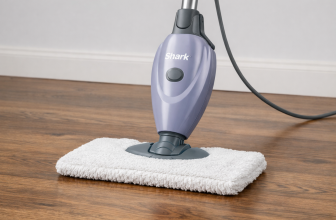
| Shark Steam Pocket | Sealed hardwood | Adjustable | Light | Small–medium | Fast drying, good control |
| Bissell PowerFresh | Tile & grout | Variable | Medium | Medium | Strong steam, grout focus |
| Bissell Symphony | Pet homes | Adjustable | Medium | Medium | Steam + vacuum combo |
| Dirt Devil Steam Mop | Budget use | Basic | Very light | Small | Simple, no extras |
| Shark S3501 | Apartments | Fixed | Lightweight | Small | Compact and reliable |
These are practical, widely used models that cover different needs rather than “one-size-fits-all” picks.
Steam Mops by Floor Type
Steam Mops for Sealed Hardwood Floors
Hardwood floors are where most hesitation comes from — and rightly so. Heat and moisture can be risky if the finish isn’t in good shape. Still, sealed hardwood floors can usually handle steam when a few rules are followed:
1. the surface is properly sealed
2. steam output is low and controlled
3. the mop never stays in one spot
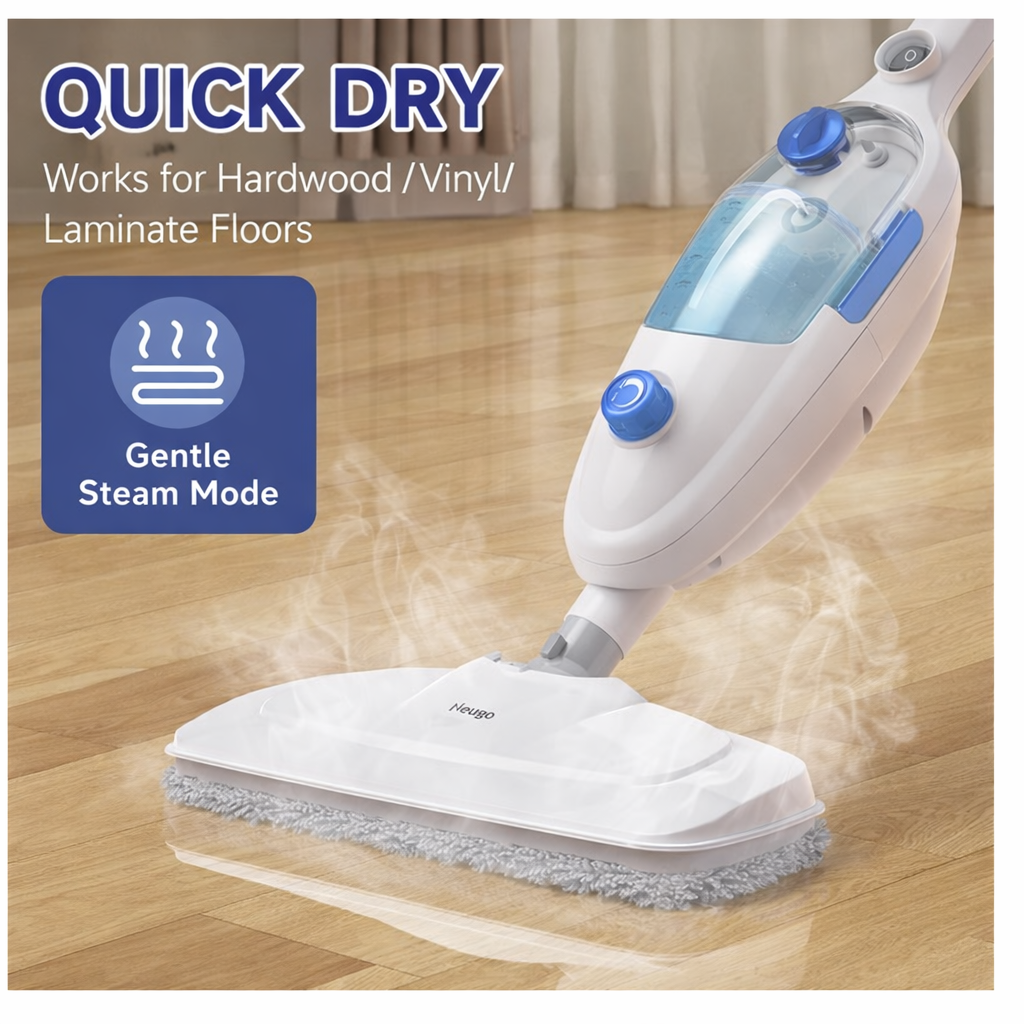
From everyday use, the biggest factor isn’t the brand — it’s how much steam you release and how quickly the floor dries. I always start at the lowest setting and keep the mop moving. If the floor feels wet, that’s already too much.
If hardwood floors are part of your home, it’s worth taking a closer look at safety before choosing a steam mop. I’ve put together a detailed hardwood floor safety breakdown that explains when steam is safe for wood — and when it’s not.
If you’re still weighing whether steam even makes sense for your routine, start with Steam Mop Benefits, which explains where steam cleaning actually helps and where it doesn’t. And if hygiene is your main concern, Do Steam Mops Kill Bacteria? What Steam Cleaning Really Does breaks down what steam can — and can’t — do for everyday germs.
For a real-world example of a lightweight model designed around controlled steam, you can also see the Senmo Steam Mop Review, which focuses on drying time and everyday floor feel after cleaning.
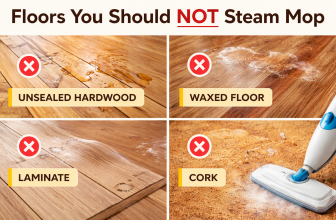
Avoid steam entirely if you have:
- unsealed or waxed wood
- oil-finished floors
- visible gaps, cupping, or swelling
From personal experience, hardwood floors are where people get into trouble the fastest. The first time I used a steam mop on sealed wood, I kept the steam too high and noticed the surface stayed damp longer than it should. Since then, I always start at the lowest setting and treat steam as a light refresh — not a deep soak.
What most people miss is that steam damage rarely happens instantly. Problems usually appear gradually — dulling, slight edge lifting, or a finish that no longer feels the same underfoot. That’s why steam should be treated as a controlled refresh, not a default cleaning method.
Steam Mops for Tile & Grout
Tile is the most forgiving surface for steam cleaning. Porcelain and ceramic handle heat well, and steam loosens grime without relying on strong chemicals.
Grout is where steam really earns its keep — especially in kitchens and bathrooms where residue builds up over time.
For tile-heavy homes, stronger steam and steady pressure matter more than delicate control.
Steam Mops for Laminate and Vinyl Floors
Laminate and vinyl fall into a gray area. Some manufacturers approve steam, others clearly warn against it. The surface itself usually isn’t the issue — moisture entering seams is.
If you choose to steam:
- keep steam output low
- move quickly
- allow full drying between passes
For older laminate or floors with raised edges, steam is often not worth the risk.
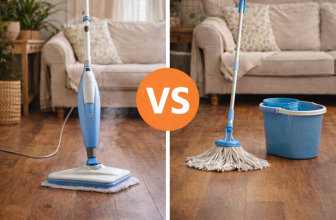
For mixed-floor homes, laminate and vinyl are often the deciding factor. If your floors have visible seams, edge lifting, or manufacturer warnings against steam, a microfiber mop may be the safer long-term choice.
Lightweight, Budget & Pet-Friendly Options
- Lightweight steam mops are easier for apartments, stairs, and quick cleanups
- Budget models work fine if you don’t need attachments
- Pet households benefit from washable pads and chemical-free cleaning
Steam cleaning is popular with pets because it leaves no residue where animals walk or rest.
Even with the right steam mop for your floor type, results can still disappoint if key details are overlooked. Many homeowners blame the machine, but technique, steam consistency, and pad condition matter more. I break this down step by step in Why Steam Mops Don’t Clean Properly, including the exact mistakes that make floors feel dull or sticky after cleaning.
How to Choose a Steam Mop That Fits Your Floors
Steam output and control
This is the most important feature for mixed-floor homes. Adjustable steam helps protect sensitive surfaces.
Pads and attachments
Extra microfiber pads improve hygiene. Specialized tools are helpful but not essential.
Weight and handling
Lighter models are easier to use often. Heavier ones may clean more aggressively but tire you faster.
Heat-up time
Most modern models heat in 20–30 seconds. Anything longer becomes frustrating.
Corded vs cordless
Corded steam mops are generally stronger and more consistent. Cordless models trade power for convenience.
Floor Safety: What Steam Mops Can — and Can’t — Do
Avoid steam on:
- unsealed or damaged wood
- waxed or oil-finished floors
- surfaces with visible gaps or swelling
Best practices:
- start with the lowest steam setting
- keep the mop moving
- change dirty pads promptly
- let floors dry naturally
For hardwood owners, the safety-focused articles linked above go into more depth and link back here whenever you want to compare floor-safe options in one place.
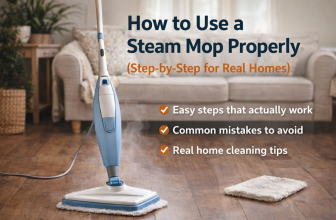
How to Use a Steam Mop the Right Way (Step-by-Step)
When used correctly, steam cleaning leaves floors fresh without chemical odors or residue.
- Sweep or vacuum first
- Attach a clean microfiber pad
- Fill the tank with distilled water
- Begin on the lowest steam setting
- Mop in smooth, continuous passes
- Allow the floor to air-dry
Below are the most common questions homeowners ask when choosing a steam mop for different floor types. These answers are based on real-world use and manufacturer guidance.
FAQ
Is a steam mop safe for sealed hardwood floors?
Usually yes, if the finish is intact and steam is kept low.
Can steam damage hardwood floors?
Yes. Excess moisture can lead to swelling, cupping, or dull finishes.
Do you need a special steam mop for wood floors?
Adjustable steam and soft microfiber pads are essential.
How often should you steam mop?
Occasionally. Steam works best as a deep-clean option, not daily maintenance.
What’s a safer alternative to steam on wood?
A microfiber mop lightly dampened with a wood-safe cleaner.
Are steam mops suitable for pet homes?
Yes. They clean effectively without leaving chemical residue.
Final Thoughts
Choosing a steam mop isn’t about finding the most hyped model — it’s about matching the tool to your floors and using it thoughtfully.
If you want a chemical-free way to refresh your home and you understand the limits of steam, a steam mop can be a practical addition. Start with floor-specific guidance, especially if hardwood is involved, and use this guide as a reference whenever you want to compare safe, real-world options.
Steam mops aren’t magic, and they’re not meant for every floor in every home. The safest results come from matching the mop to your floor type, controlling steam output, and using proper technique.
As a reference point, this guide is designed to help you choose and use steam mops for every floor responsibly — without relying on guesswork or risking long-term damage.