
Why floors feel rough after cleaning is a common and confusing problem. You clean the floor. It shines. It reflects light. It looks perfect.
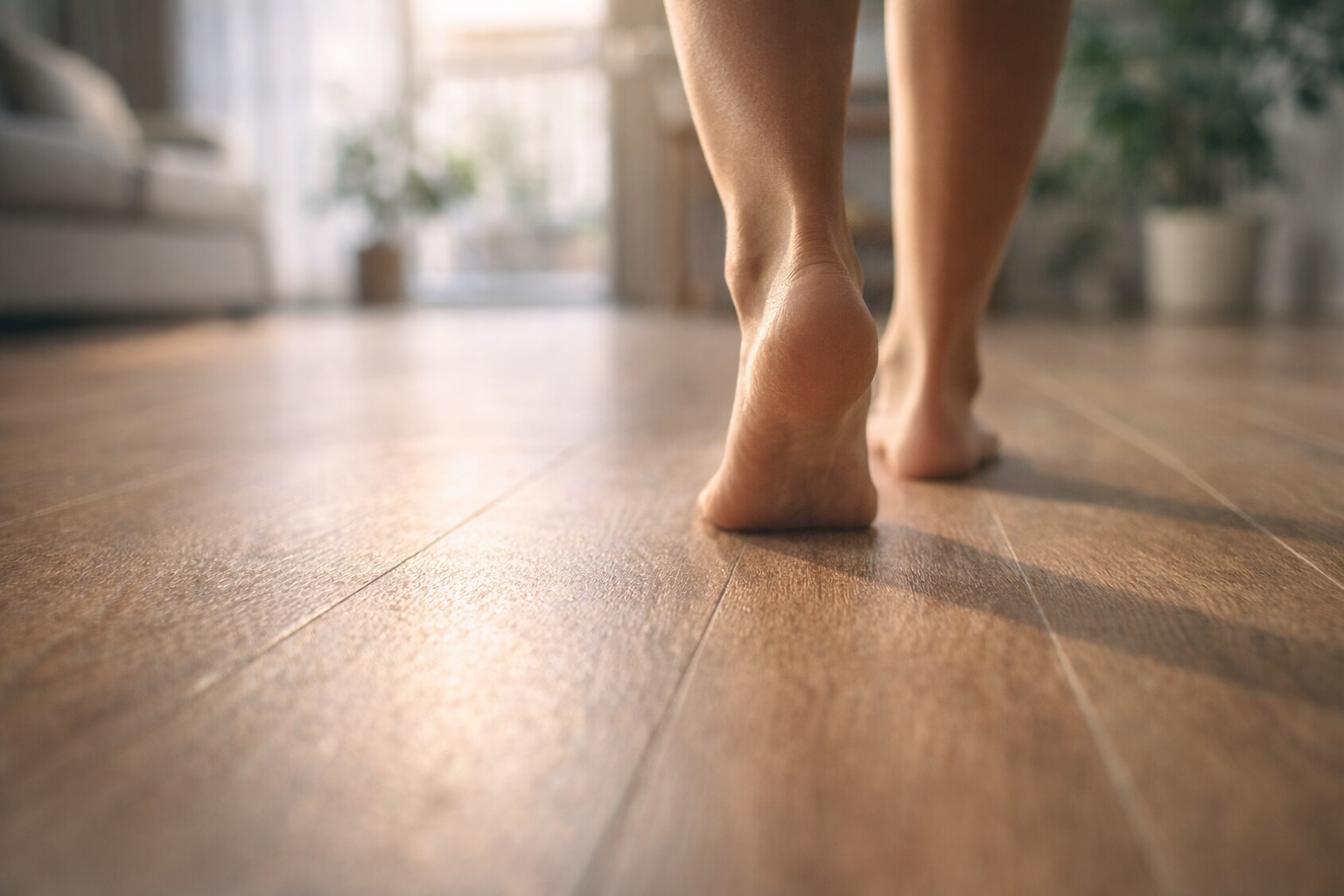
But when you walk across it barefoot, it feels rough. Not sticky. Not slippery. Just slightly gritty — almost like a fine texture under your skin.
If this keeps happening, it’s confusing. The floor looks clean, but your feet disagree.
Here’s the important thing: rough doesn’t automatically mean dirty or damaged. In most cases, it’s about residue distribution, mineral deposits, or surface imbalance.
Let’s unpack what’s really going on.
The “Clean but Rough” Problem
Most people describe it like this:
- Slight sandpaper feeling under bare feet
- Texture that appears after drying
- Surface looks glossy but feels uneven
- Worse in certain light or areas
This is a sensory mismatch. Your eyes see smooth. Your feet feel texture.
The Most Common Causes of Rough Floors After Cleaning
Mineral Deposits From Water
Water evaporates. Minerals don’t.
If you have moderate or hard water, evaporation can leave:
- Calcium traces
- Magnesium residue
- Microscopic crystal patterns
These are invisible — but detectable by skin.
Many “rough” floors are actually mineral texture, not dirt.
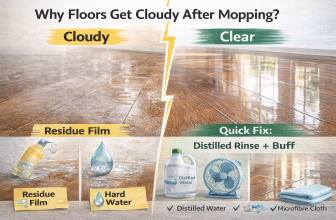
Mineral deposits don’t always create texture. In some cases, they scatter light without changing feel. If the floor looks hazy but remains smooth, it’s worth reviewing why floors get dull after cleaning and how evaporation residue affects visual clarity.
Mineral texture issues often begin during evaporation. The proper drying time after cleaning floors can make a significant difference.
Dried Residue Film Breaking Apart
When older cleaning residue thins out over time, it doesn’t always leave evenly.
Instead, it can dry in fragmented patches.
Those micro-fragments create subtle tactile roughness.
Over-Drying or Rapid Evaporation
Fast airflow can sometimes cause uneven drying.
When moisture evaporates quickly:
- Residue doesn’t redistribute evenly
- Surface tension changes
- Microtexture becomes noticeable
Dust Reattachment During Drying
If the floor dries slowly in a dusty environment:
- Airborne particles can settle
- They bond to slightly damp residue
- The result feels grainy
Even clean rooms contain microscopic dust.
Why Roughness Appears Only After Cleaning
Before cleaning, residue layers are often uniform.
Moisture temporarily dissolves them.
As drying occurs, redistribution isn’t always perfect.
That’s when texture becomes noticeable.
Roughness is often the transition phase between residue states.
In some homes, the surface doesn’t feel rough but overly smooth instead. In those cases, it’s helpful to understand why floors feel slippery after cleaning and how thin residue films reduce traction.
Rough vs Sticky vs Slippery — How They Differ
| Sensation | Likely Cause |
|---|---|
| Sticky | Concentrated residue |
| Slippery | Thin film reducing friction |
| Rough | Mineral or uneven residue texture |
Sometimes the same floor can cycle through all three depending on moisture balance.
If the texture shifts from gritty to slightly tacky over time, the cause may overlap. Understanding why floors get sticky after mopping helps explain how residue concentration changes surface feel.
Quick Tests to Identify the Cause
The White Sock Test
Walk across the area wearing clean white socks.
- Light dust transfer → airborne reattachment
- No visible transfer → mineral or residue texture
The Damp Spot Test
Lightly dampen a cloth and wipe a small area.
Let it dry naturally.
- Smoother after drying → mineral buildup
- Still rough → residue layering
The Light Angle Check
Look across the floor at a low angle.
- Slight haze → residue
- Clear shine but texture remains → mineral micro-deposits
How to Fix Rough Floors Without Overcleaning
Use Less Water
Excess moisture amplifies redistribution issues.
Control Drying Speed
Avoid strong airflow directly across the floor while drying.
Dry Microfiber Buff
A dry pass after full drying often restores surface balance.
Occasional Neutral Rinse
Alternating between light damp maintenance and full cleaning reduces buildup layering.
Floor Types That Show Roughness More Easily
- Sealed hardwood
- Laminate
- Matte-finish vinyl
- Light-colored flooring
These surfaces amplify tactile differences more than darker or textured materials.
Is Roughness a Sign of Damage?
Usually, no.
True finish failure typically includes:
- Visible scratches
- Flaking
- Peeling
- Discoloration
If the surface looks intact, roughness is almost always superficial.
Chronic roughness usually signals repeated mineral or residue imbalance — not structural failure.
When You Should Reassess
Pause adjustments if:
- Roughness increases after each cleaning
- You see visible haze
- The surface feels uneven in isolated patches
That suggests buildup rather than temporary drying imbalance.
Moisture imbalance can also affect scent, not just texture. If your floor smells damp after cleaning, it may be part of the same surface reaction that causes roughness.
Final Thoughts
A floor can look clean and still feel rough.
That doesn’t mean it’s dirty.
It means surface chemistry shifted during drying.
Most cases resolve with:
- Controlled moisture
- Clean pads
- Proper drying
- Occasional balance resets
Your feet are sensitive. They detect changes your eyes can’t.
That sensitivity is useful — not alarming.
FAQ
Why do my floors feel rough after mopping?
Most likely mineral deposits — calcium and magnesium from hard water dry into microscopic crystal layers that your feet detect even when the surface looks clean.
Why do floors feel gritty after cleaning but look fine?
Your skin is more sensitive than your eyes. The surface has uneven residue or mineral texture at a microscopic level that doesn’t register visually under normal light.
Does hard water make floors feel rough?
Yes, consistently. Mineral deposits accumulate with each cleaning cycle. A periodic diluted white vinegar rinse breaks down buildup without damaging most sealed floors.
Is rough flooring a sign of finish damage?
Rarely. Finish damage shows visually — scratches, flaking, discoloration. If the floor looks intact, it’s almost always surface residue or minerals.
How do I fix floors that feel rough after every cleaning?
Reduce water volume, switch to filtered water if you have hard water, and do a dry microfiber buff after drying. Persistent roughness usually responds to a 1:10 white vinegar rinse.