
You finish mopping. The surface looks spotless. But when it dries, something feels off. Instead of shine, the floor looks cloudy, flat, or muted under light.
If you’re wondering why floors get dull after cleaning, the cause is usually one of two things:
- Surface residue interfering with light
- Actual finish wear or gloss degradation
The difference matters. One is temporary. The other requires restoration.
Let’s break this down properly.
What “Dull” Actually Means
When homeowners say:
- “My floors look dull after mopping”
- “My hardwood floor looks cloudy after cleaning”
- “My laminate floor looks faded after washing”
They’re usually describing a change in light reflection — not dirt. Dullness can appear as:
- Haze in sunlight
- Loss of shine
- Matte patches
- Streaky reflection
- Flat finish under overhead lights
This is often confused with damage — but most cases are optical. Repeated over-wetting gradually reduces gloss. Here’s how excess water stresses floor finishes over time.
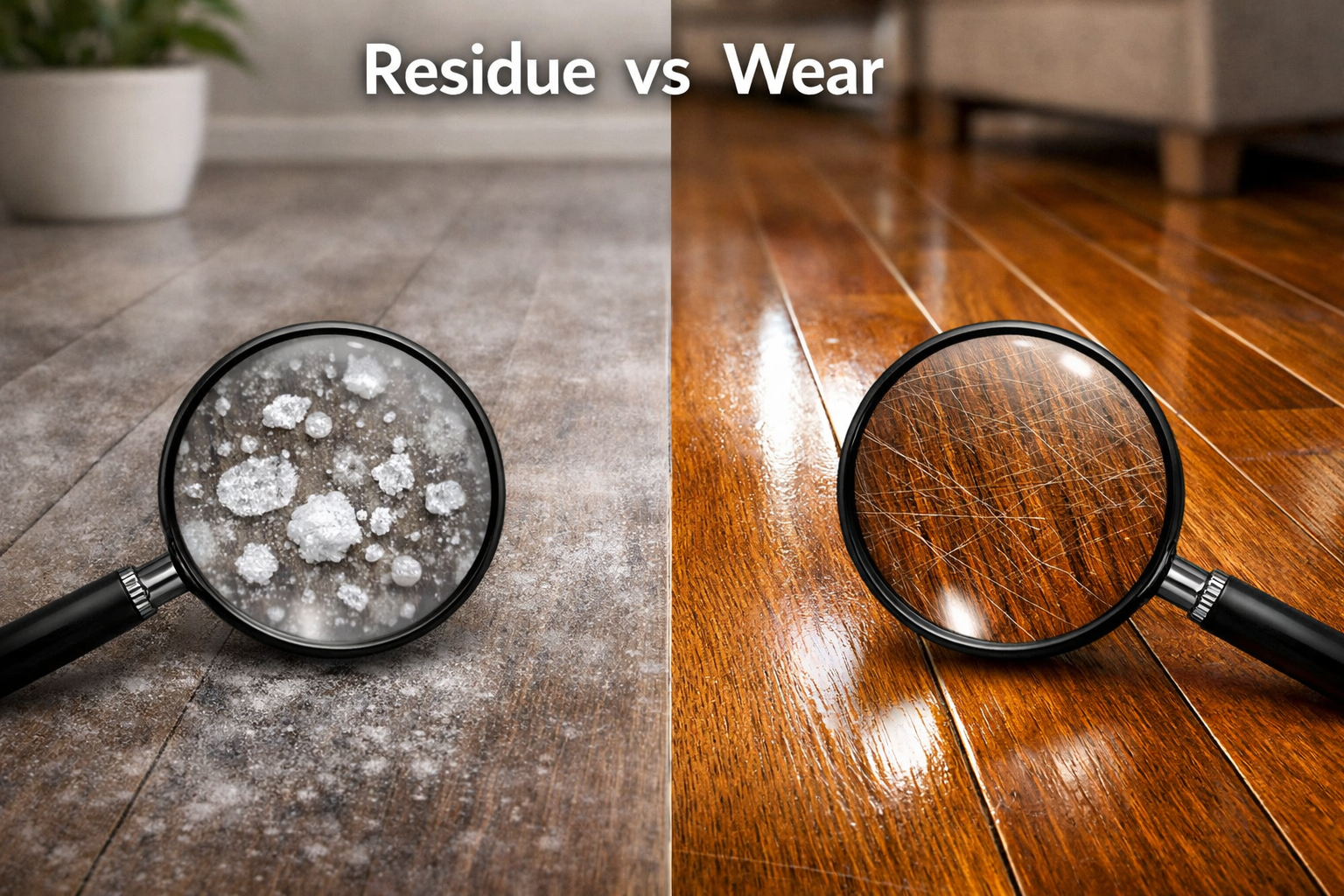
Quick Diagnostic Test (Residue vs Wear)
Before assuming damage, try this:
- Dampen a microfiber cloth with distilled water.
- Wipe a small test section.
- Immediately dry it.
- Compare the cleaned spot with surrounding floor.
If the wiped section looks clearer → likely residue film. If nothing changes → possible worn finish.
This simple test often answers the question: is my dull floor from cleaner buildup or wear?
Cause #1: Residue Film (Most Common)
In most homes, when floors look dull but clean, the issue is film buildup. When water evaporates, dissolved substances remain:
- Cleaner concentrate
- Surfactants
- Hard water minerals
- Shine-enhancing polymers
This creates microscopic evaporation residue on hardwood or tile. Even if you don’t feel it, it alters reflectivity.
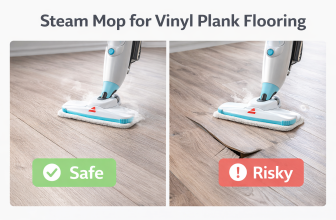
If dullness keeps returning despite changing technique, the issue is usually residue accumulation — not the floor itself. A steam mop with controlled moisture output can reset this. I reviewed the best option I found:
Senmo Steam Mop Review.
Why Floors Look Worse After Mopping
This is counterintuitive. Before cleaning, buildup may be uneven. After mopping, residue becomes evenly distributed. Uniform film = uniform haze. That’s why many people say: “My floor looked better before I cleaned it.”
Hard Water Haze on Hardwood
If you live in a hard water area, dullness may come from mineral buildup on floors.
Calcium and magnesium remain after drying, forming:
- White film after mopping
- Cloudy layer on dark wood
- Chalky sheen on tile
This is sometimes called hard water dull finish. It’s not wear. It’s mineral interference.
Why Does My Floor Look Better When Wet?
This is one of the strongest diagnostic clues.
When wet:
- Water fills micro-scratches
- Reflection smooths temporarily
- Surface looks vibrant
When dry:
- Minerals remain
- Light scatters
- Gloss decreases
If your floor looks shiny while damp but dull when dry, residue is the likely cause.
Uneven Drying & Streaky Dullness
If you notice:
- Streaky dull appearance
- Patchy matte spots
- Swirl haze patterns
The issue may be uneven residue distribution.
Common reasons:
- Too much cleaner
- Not changing mop water
- Dirty microfiber pad
- Poor airflow while drying
This leads to clean floor looks flat not shiny scenarios.
Cause #2: Surface Wear
If rinsing does not improve clarity, dullness may be structural. This is more common in high-traffic areas.
Hardwood: Worn Polyurethane Finish
Over time:
- Micro-scratches accumulate
- Protective coating thins
- Traffic lanes lose gloss
This appears as:
- Traffic lane dullness
- Gloss degradation
- Uneven shine between rooms
Unlike residue, wear does not improve after rinsing.
You may need:
- Screen and recoat
- Professional refinishing
Laminate Floor Looks Dull After Cleaning
Laminate has a thin wear layer. If damaged:
- Shine does not return
- Surface looks permanently flat
- No sanding option available
In this case, restoration products must match manufacturer guidelines.
Tile Floors Look Dull After Cleaning
Tile rarely wears out quickly. But haze can come from:
- Grout residue
- Soap scum layering
- Acidic cleaner etching
This may create a cloudy film on floors that mimics wear.
When Dullness Transitions Into Other Problems
Surface chemistry can evolve.
If haze becomes slightly tacky over time, it may overlap with buildup layering. Understanding why floors get sticky after mopping helps explain how residue concentration shifts texture.
If instead the floor becomes slick rather than matte, the issue may relate to thin film distribution. In that case, review why floors feel slippery after cleaning.
If haze appears with a damp odor, moisture imbalance may be contributing. See why floors smell after mopping for that breakdown.
Improper drying can worsen haze and film buildup. Understanding how long floors should dry before use helps prevent optical dullness.
Less Obvious Reasons Floors Lose Shine After Cleaning
1️⃣ Mixing Cleaning Products
Combining vinegar, soap, polish, and other cleaners can cause chemical dulling.
Even without stickiness.
2️⃣ Using Too Much “Shine Restorer”
Ironically, gloss enhancers build layers.
Over time, this creates optical haze rather than shine.
3️⃣ Steam Mop Overuse
Frequent steam exposure can:
- Soften protective coatings
- Highlight micro-abrasion
- Reduce surface clarity
Steam doesn’t instantly cause dullness — but it can accelerate finish breakdown.
4️⃣ Micro-Abrasion from Grit
Tiny particles act like sandpaper.
Over months, this leads to:
- Surface reflectivity loss
- Micro-scratch reflection change
- Permanent gloss reduction
How to Remove Cleaner Buildup from Floors
If dullness is residue-related, restoration is usually simple.
- ✔ Switch to distilled water rinse
- ✔ Reduce cleaner concentration
- ✔ Change mop pads frequently
- ✔ Buff dry immediately
- ✔ Improve airflow while drying
Many homeowners see improvement after just one proper rinse cycle.
How to Tell If Hardwood Needs Refinishing
Ask yourself:
- Does dullness stay after rinsing?
- Are traffic lanes visibly thinner?
- Do you see scratch webbing in sunlight?
If yes, it may not be residue. This becomes a residue vs wear on hardwood situation. Wear requires surface restoration — not more cleaning.
FAQ
Why do my floors look dull after cleaning?
Almost always residue — cleaner concentrate or hard water minerals left behind after evaporation form a thin film that scatters light instead of reflecting it cleanly.
Why does my floor look better when wet than when dry?
Water temporarily fills micro-scratches and smooths the surface optically. When it evaporates, minerals and residue remain, and gloss drops. If this happens every time, the cause is residue — not wear.
Can too much cleaner make floors dull?
Yes. Excess product doesn’t rinse away fully — it redistributes during drying into a uniform haze. Counterintuitively, using less cleaner often restores more shine.
Is dullness a sign of finish damage?
Not usually. Finish damage shows as scratch webbing, traffic lane thinning, or dullness that doesn’t improve after a clean rinse. If a damp wipe with distilled water improves clarity, it’s residue.
How do I restore shine after mopping?
Start with a distilled water rinse and dry microfiber buff. If shine returns, the issue was buildup. If nothing changes, inspect for finish wear — that requires recoating, not more cleaning.
Final Thoughts
When floors get dull after cleaning, the instinct is to assume damage. But in most cases, the surface isn’t worn — it’s coated. The key question isn’t: “Did I ruin my floor?” It’s: “Did something stay behind after the water evaporated?” Once you separate residue from wear, the solution becomes clear. And most of the time — it’s reversible.