
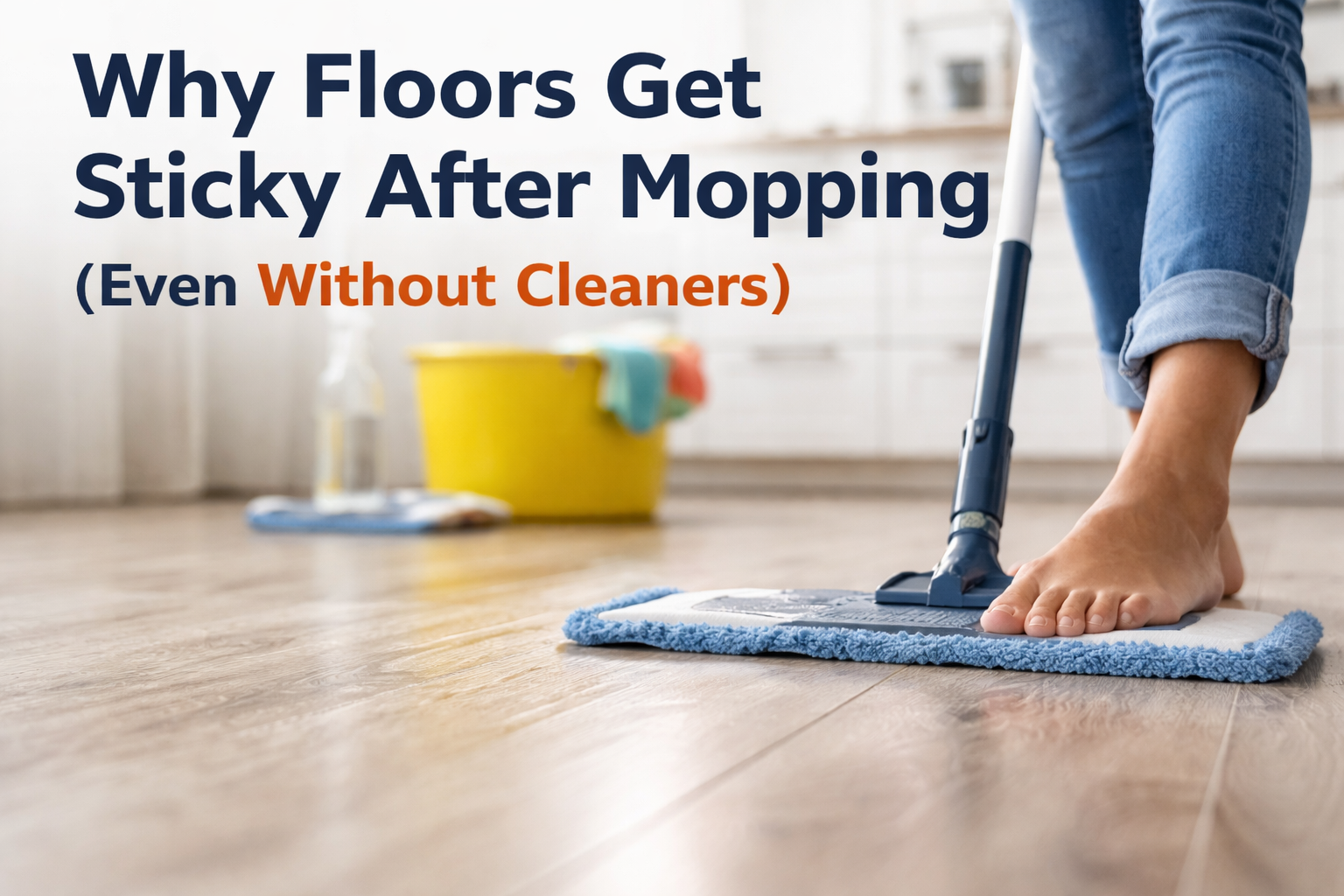
Why floors get sticky after mopping is one of the most confusing cleaning problems — especially when you’re using only water and the floor still feels tacky after drying.
You mop. The floor looks clean. It dries. And then — it feels… sticky.
Not visibly dirty. Not wet. Just uncomfortable under bare feet, almost like a thin film you can’t see but definitely feel. If this keeps happening, even when you use only water, it’s frustrating — and confusing.
Here’s the key thing to know upfront: stickiness doesn’t mean your floor is dirty, and it doesn’t mean you did something wrong. This is a common, mechanical problem caused by how moisture, residue, and surfaces interact. Once you understand what’s actually happening, it becomes much easier to fix — and prevent.
The Sticky Floor Problem (What People Notice First)
Most people describe the problem the same way:
- A tacky feeling under bare feet, especially when walking slowly
- Floors that feel worse after drying, not while wet
- A surface that looks clean but feels “off” or uncomfortable
This mismatch — clean-looking but unpleasant — is what makes sticky floors so confusing. Your eyes say the job is done. Your feet disagree.
The Real Reasons Floors Feel Sticky After Mopping
Sticky floors rarely have a single cause. It’s usually a small chain reaction.
Residue Buildup (Even From “Clean” Water)
Water isn’t empty. Even without cleaners, it can leave things behind:
- Mineral salts from hard water
- Old cleaner residue still sitting on the floor from past cleanings
- Microscopic debris lifted and then re-deposited
When water evaporates, whatever was dissolved in it stays on the surface — invisible, but tangible.
Over time, residue buildup doesn’t just change texture — it can also affect clarity. If your surface looks cloudy rather than tacky, it may help to understand why floors get dull after cleaning and how film buildup interferes with light reflection.
Too Much Moisture
More water does not equal more cleaning.
- Over-wetting floods the surface instead of lifting residue
- Repeated passes spread the same film around
- You get a “flood & smear” effect instead of removal
As the water dries, residue becomes concentrated — and sticky.
If moisture lingers too long, residue can concentrate unevenly. Learn how long to let floors dry after mopping to avoid sticky film.
Dirty or Oversaturated Mop Pads
Pads can work against you if they’re not clean or too wet:
- They hold onto residue instead of releasing it
- Once saturated, they stop absorbing and start redistributing
- Each pass adds another thin layer
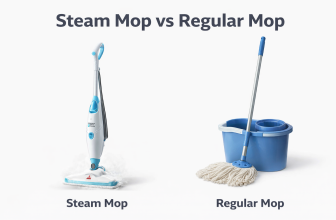
The most effective fix is switching to a steam mop with fresh microfiber pads — steam breaks down residue with heat instead of spreading it with water. I tested the Senmo Steam Mop specifically for this problem — here’s what actually happened.
Floor Finish Interaction
Not all finishes behave the same:
- Sealed floors repel moisture — residue stays on top
- Worn or micro-porous finishes trap residue unevenly
- Drying can leave patchy, tacky zones
Most “sticky” floors are caused by water + existing residue, not dirt itself.
Why Sticky Floors Happen Even If You Use Only Water
This is the part most people don’t expect.
Water is not neutral.
- It contains minerals
- It dissolves what’s already on the floor
- It doesn’t remove residue unless something absorbs it
Drying ≠ cleaning.
Drying simply means the water left — not what the water was carrying.
If moisture lifts old residue but nothing removes it from the surface, it just gets left behind in a thinner, more noticeable layer. That’s why floors can feel stickier after mopping than before.
If the surface doesn’t feel tacky but instead slightly gritty under bare feet, the issue may relate to mineral deposits rather than residue concentration.
How to Tell What’s Causing the Stickiness (Quick Tests)
You don’t need tools — just quick checks.
The Barefoot Test
What to do: Walk slowly across the floor with clean, dry feet.
What it means:
- Uniform tackiness → thin residue film
- Patchy stickiness → uneven moisture or finish issues
The Damp Towel Test
What to do: Lightly dampen a clean towel and wipe a small area once. Let it dry.
What it means:
- Feels better → residue was removed
- Feels the same → moisture imbalance or pad issue
The Spot Re-Clean Test
What to do: Clean a small section using less water and a clean surface contact.
What it means:
- Improvement → over-wetting was the cause
- No change → embedded residue or finish interaction
How to Fix Sticky Floors Without Re-Mopping Everything
You usually don’t need to start over.
Dry Microfiber Pass
- Use a dry, clean microfiber
- One slow pass to absorb residue
- No added moisture
Light Rinse Technique
- Slightly damp (not wet) cloth or pad
- Single, controlled pass
- Let air-dry fully
Pad Reset (When to Replace vs Wash)
- Wash pads if they feel stiff or slick
- Replace if they no longer absorb
- Never reuse an oversaturated pad
How to Prevent Sticky Floors in the Future
Quick checklist:
- Use less water than you think you need
- Start with clean, dry pads
- Avoid repeated passes
- Allow complete drying before walking
Technique matters more than effort.
Floor Types More Prone to Stickiness
Some surfaces show the problem more easily:
- Sealed hardwood
- Laminate
- Vinyl / LVP
This doesn’t mean they’re fragile — just less forgiving of residue.
Is Stickiness a Sign of Floor Damage?
Short answer: usually no.
Most sticky floors are a surface issue, not structural damage.
Sticky ≠ damaged — but chronic stickiness can signal a repeated care mistake that’s worth correcting.
In some homes, the issue isn’t tackiness but the opposite effect — a surface that feels overly smooth instead. If your floor feels slick rather than sticky, it helps to understand why floors feel slippery after cleaning and how residue balance affects traction.
When Sticky Floors Mean You Should Stop and Reassess
Pause and reassess if:
- Stickiness increases after each cleaning
- A cloudy or hazy look appears
- There’s a lingering odor
These signs suggest buildup rather than cleanliness.
Final Thoughts
You’re not alone — and you didn’t fail at cleaning.
Sticky floors are a process problem, not a hygiene one. Once moisture, residue, and absorption are balanced, the issue usually disappears quickly.
Technique matters more than tools.
In many cases, sticky floors aren’t about the surface itself but about how moisture is applied and removed. If you want to double-check your technique, it may help to review how to use a steam mop properly and understand why a steam mop isn’t cleaning efficiently in the first place.
FAQ
Why do my floors feel sticky after mopping with water?
Because water lifts existing residue and minerals, which stay behind when it dries.
Can sticky floors damage hardwood over time?
Not immediately. Long-term residue buildup, however, can interfere with finishes.
Should I mop again if floors feel sticky?
Usually no. A dry or lightly damp pass is often more effective.
How long should floors dry after mopping?
Typically 20–60 minutes, depending on moisture level and airflow.