
If you’re trying to figure out how to clean grout without scrubbing, you’re not alone — it’s one of the most frustrating cleaning tasks in any home.
Worse, aggressive scrubbing can actually damage grout over time and make it harder to clean in the future.
The good news is that you don’t need to scrub at all. There are several methods that clean grout without scrubbing, using either heat, chemistry, or targeted cleaners. The best option depends on how dirty your grout is — and how quickly you want results.
Quick Answer
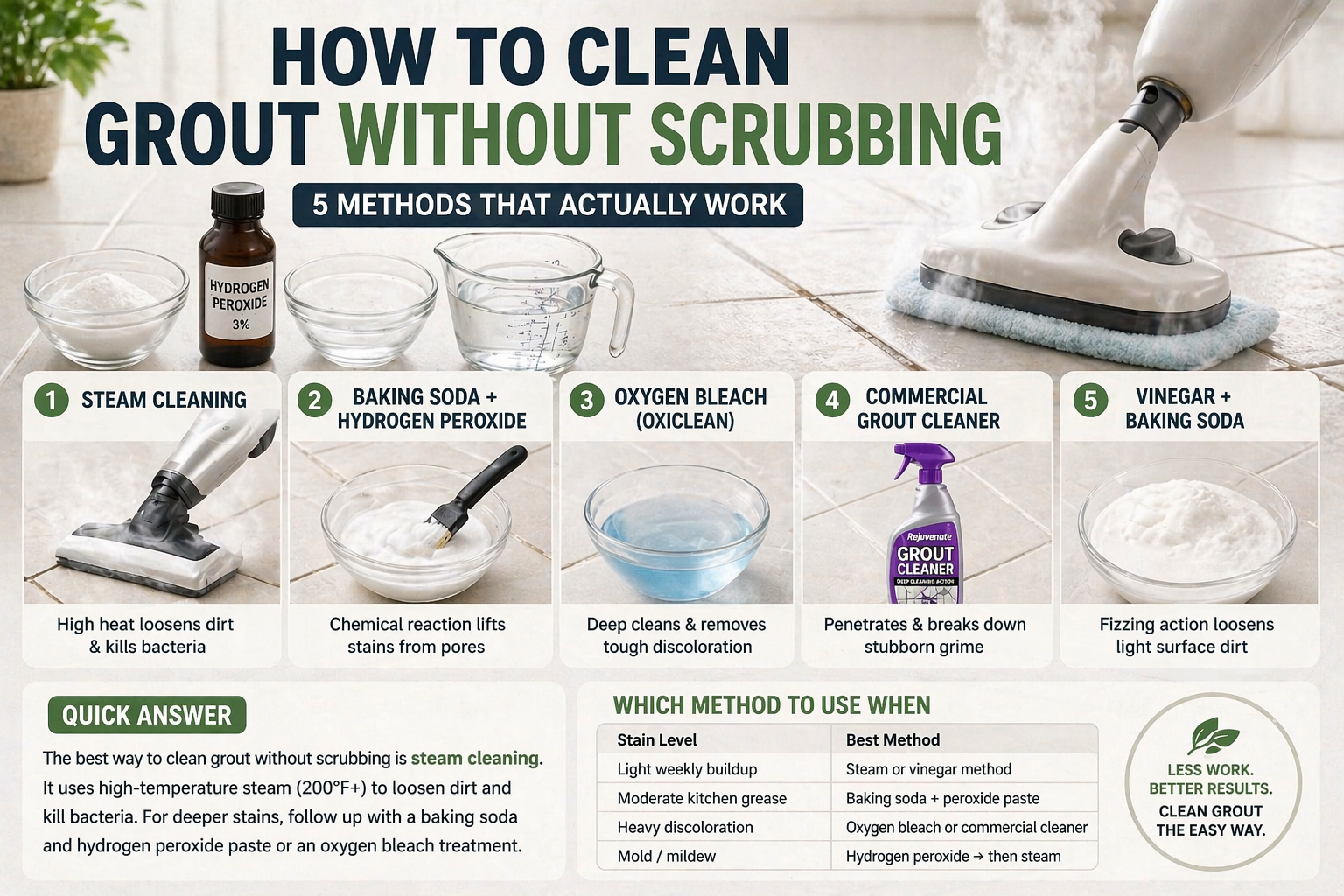
The best way to clean grout without scrubbing is to use steam cleaning for regular maintenance and a baking soda + hydrogen peroxide paste for deeper stains. Steam loosens dirt inside grout lines, while the paste lifts embedded discoloration without damaging the surface.
Why Grout Gets Dirty (and Why Scrubbing Can Make It Worse)
Grout is naturally porous. It’s made from a mix of cement and sand, which means it absorbs:
- dirt
- grease
- soap residue
- moisture
That’s why grout lines darken even when your tile looks clean.
Regular mopping doesn’t help much either. In fact, it often makes things worse by pushing dirty water into the grout instead of pulling it out. This is one of the reasons why steam mops outperform regular mops for tile floors — they extract rather than spread.
Scrubbing seems like the solution—but it comes with a downside. Stiff brushes can wear down the surface of grout, making it rougher. And rough grout traps even more dirt.
There’s also a big difference between sealed and unsealed grout. Sealed grout resists staining much better, while unsealed grout absorbs everything faster.
5 Ways to Clean Grout Without Scrubbing
1. Steam Cleaning (Best Overall Method)
If I had to recommend one method to try first, it would be steam.
Instead of brushing grout manually, steam uses high heat (often over 200°F) to loosen dirt inside the grout lines. You simply run the steam over the grout and wipe it away with a microfiber pad.
Why it works:
- heat breaks down grease and grime
- steam penetrates grout pores
- kills bacteria without chemicals
Best for:
- regular maintenance
- moderate dirt buildup
- kitchens and bathrooms
Limitations:
- won’t fully remove deep staining on its own
For the best results, I usually pair this with the right tools. I break that down in my guides to the best steam cleaners for grout and the best steam mops for tile and grout, depending on whether you want precision or full-floor cleaning.
2. Baking Soda + Hydrogen Peroxide Paste
This is one of the most reliable non-scrubbing methods for visible stains.
How to use it:
- Mix ½ cup baking soda
- Add ¼ cup hydrogen peroxide
- Add 1 teaspoon dish soap
- Apply to grout lines
- Let sit for 10–15 minutes
- Wipe away with a damp cloth
Why it works:
The mixture creates a mild chemical reaction that lifts dirt out of grout pores.
Best for:
- spot cleaning
- moderate discoloration
Limitations:
- needs time to work
- may require a second application
3. Oxygen Bleach (OxiClean)
If you’re dealing with large areas of dirty grout, this is one of the easiest methods.
How to use it:
- Dissolve oxygen bleach in warm water
- Pour or apply it over grout
- Let sit for 15–30 minutes
- Wipe or rinse away
Why it works:
Oxygen bleach releases bubbles that lift stains without damaging grout like chlorine can.
Best for:
- large tile floors
- deep cleaning sessions
Limitations:
- can slightly lighten colored grout
4. Commercial Grout Cleaners
Products like Zep or Rejuvenate are designed specifically for grout.
How to use it:
- Apply directly to grout lines
- Let sit as directed
- Wipe away
Why it works:
These formulas are designed to penetrate grout and break down buildup quickly.
Best for:
- heavily stained grout
- fast results
Limitations:
- strong smell
- higher cost over time
5. Vinegar + Baking Soda (Budget Option)
This is the most common DIY method—but also the weakest.
How to use it:
- Sprinkle baking soda on grout
- Spray vinegar over it
- Let it fizz for about 10 minutes
- Wipe clean
Why it works:
The fizzing reaction helps loosen surface dirt.
Best for:
- light maintenance
- quick refresh
Limitations:
- not effective for deep stains
- vinegar can damage grout over time
⚠️ Avoid using vinegar on natural stone tiles — it can damage the surface.
Which Method to Use When
| Situation | Best Method |
|---|---|
| Light weekly buildup | Steam or vinegar method |
| Moderate kitchen grease | Baking soda + peroxide paste |
| Heavy discoloration | Oxygen bleach or commercial cleaner |
| Mold or mildew | Hydrogen peroxide → then steam |
How to Keep Grout Clean After Cleaning
Once grout is clean, maintenance becomes much easier.
- Seal grout once a year
- Switch from regular mopping to steam cleaning
- Clean spills immediately
- Vacuum or sweep before mopping
For daily maintenance, using a steam mop designed for tile and grout helps keep grout from getting dirty again between deep cleans.
If you’re comparing options, I also break down the differences in my Shark vs Bissell steam mop comparison, especially for tile and grout performance.
FAQ
Does steam actually clean grout?
Yes — steam at 200°F or higher penetrates grout pores and loosens embedded dirt, grease, and bacteria without chemicals. It works best for regular maintenance and moderate buildup. For heavily stained grout, steam alone won’t be enough — combine it with a baking soda and hydrogen peroxide paste first, then follow up with steam for the best results. For tool recommendations, see my best steam cleaners for grout guide.
Will vinegar damage grout?
Over time, yes. Vinegar is acidic and can weaken cement-based grout. It’s fine occasionally, but not as a regular cleaning method.
How often should you deep clean grout?
Every 3–6 months is enough for most homes. Regular steam cleaning reduces how often deep cleaning is needed.
Final Thoughts
Cleaning grout doesn’t have to mean hours of scrubbing.
In most cases, the best approach is to let heat or chemistry do the work for you—not brute force.
If you want the simplest solution, start with steam. If that’s not enough, move to a paste or oxygen bleach. And once your grout is clean, maintenance becomes much easier.
Affiliate Disclosure: This post may contain affiliate links. If you click through and make a purchase, I may earn a small commission at no extra cost to you. I only recommend products I genuinely believe are worth your money. This helps support Better Home Days and keeps the content free.