
If your steam mop leaves streaks, haze, or a dull film on your floors, it’s frustrating—and confusing. You expected clean, shiny floors, not something that looks worse after cleaning.
Here’s the truth: your steam mop usually isn’t the problem — something else is.
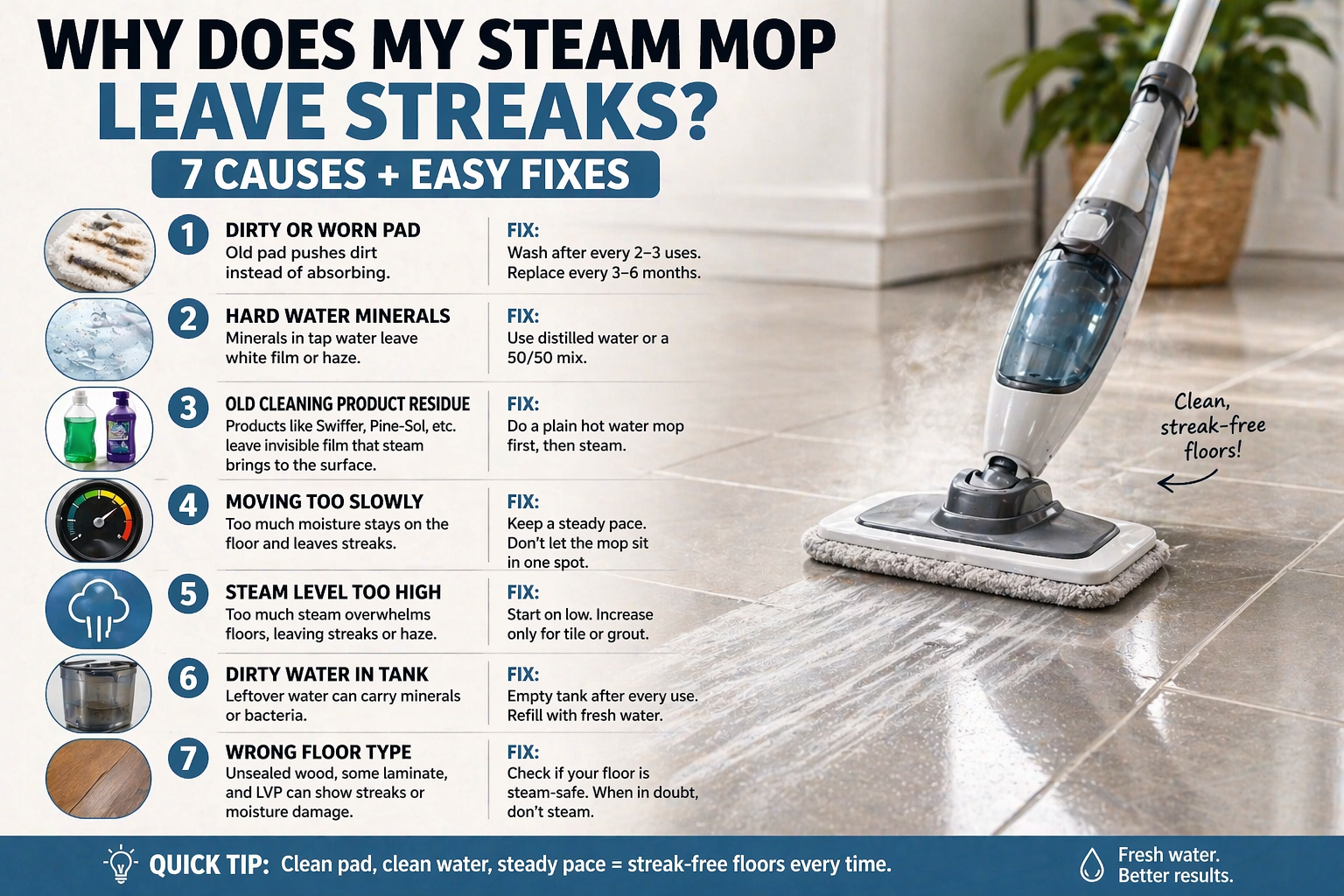
In most cases, streaks come down to one of seven causes: a dirty pad, hard water, leftover cleaning residue, moving too slowly, too much steam, dirty tank water, or using steam on the wrong floor type.
Once you identify the cause, the fix is usually simple.
7 Reasons Your Steam Mop Leaves Streaks
1. Dirty or Worn Pad
This is the most common reason.
If your microfiber pad is dirty or worn out, it stops absorbing water properly. Instead of lifting dirt, it just pushes it around the floor, leaving streaks behind.
Fix:
- Wash pads after every 2–3 uses
- Replace every 3–6 months
- Use multiple pads during one cleaning session
If you’re using Shark, I’ve broken down compatible options and replacements in my guide to Shark steam mop pads.
2. Hard Water Minerals
If you use tap water, minerals like calcium can leave a white, chalky film on your floors.
How to tell:
- haze appears after drying
- surface feels slightly dusty or chalky
Fix:
- use distilled water
- or mix 50/50 distilled + tap
This also helps extend the life of your steam mop.
3. Old Cleaning Product Residue
This one surprises a lot of people.
If you previously used products like Swiffer, Pine-Sol, or other cleaners, they often leave an invisible film. When steam heats that film, it becomes visible as streaks or haze.
Fix:
- mop once with plain hot water and microfiber
- then steam clean
This is exactly why some people think steam damaged their floor — it didn’t. It simply revealed buildup that was already there.
I explain this in more detail in my guide on why floors get cloudy after mopping, because the cause is often the same.
4. Moving Too Slowly
Steam mops work best when you keep moving.
If you go too slowly or pause in one spot, you’re adding too much moisture to the surface — which leads to streaks.
Fix:
- use a steady, moderate pace
- don’t let the mop sit in one place
This is especially important on hardwood and laminate.
5. Steam Level Too High
More steam isn’t always better.
On tile, high steam works well. But on wood, laminate, or vinyl, it can leave visible streaks or a wet finish.
Fix:
- start on the lowest setting
- increase only if needed
This matters most on adjustable models. I go deeper into this in my Bissell steam mop review and Shark steam mop review, where steam control makes a big difference.
6. Dirty Water in the Tank
If you leave water sitting in the tank between uses, it can collect minerals or bacteria.
That residue gets pushed out during your next cleaning session.
Fix:
- empty the tank after every use
- refill with fresh water before cleaning
It’s a small habit that prevents a lot of problems.
7. Wrong Floor Type
Sometimes streaks aren’t just streaks — they’re a warning sign.
Floors like:
- unsealed hardwood
- some laminate
- LVP
don’t handle steam well. What looks like streaking can actually be early moisture damage or uneven drying.
Fix:
- confirm your floor is steam-safe
- switch to a different cleaning method if needed
If you’re unsure, check my full guide on using a steam mop on hardwood floors and what floors you should not steam mop.
Quick Diagnostic
| Symptom | Likely Cause | Fix |
|---|---|---|
| White haze or film | Hard water OR residue | Use distilled water / pre-clean |
| Dull finish after drying | Product buildup | Do a plain water pass first |
| Visible wet streaks | Too slow / too much steam | Move faster, lower steam |
| Streaks mainly on wood | Floor not sealed | Stop using steam |
FAQ
Should I use distilled water in my steam mop?
Yes — especially if you have hard water. It prevents mineral buildup, reduces streaking, and helps your machine last longer.
Should I use distilled water in my steam mop?
Yes — especially if you have hard water. It prevents mineral buildup, reduces streaking, and helps your machine last longer.
Why do my floors look worse after steam mopping?
In most cases, it’s not damage — it’s residue. Steam reveals old cleaning product buildup that wasn’t visible before. Cleaning with plain water first usually fixes it.
Can streaks damage my floor?
No, streaks themselves are cosmetic. But the cause — like too much moisture or the wrong floor type — can lead to long-term damage if ignored.
Final Thoughts
If your steam mop is leaving streaks, don’t assume the machine is faulty.
Most of the time, it’s something simple—like a dirty pad, leftover residue, or using the wrong settings.
Once you fix the cause, steam mops go back to doing what they’re supposed to do: cleaning without leaving anything behind.
If your mop still doesn’t perform as expected, you might want to check my full guide on why your steam mop is not cleaning properly, where I break down deeper performance issues.
Affiliate Disclosure: This post may contain affiliate links. If you click through and make a purchase, I may earn a small commission at no extra cost to you. I only recommend products I genuinely believe are worth your money. This helps support Better Home Days and keeps the content free.